
Introduction
Launching an online store has never been easier, but choosing the right eCommerce platform can make the difference between steady growth and hitting technical limitations as your business expands.
Many businesses begin with hosted platforms because they’re quick to set up and require very little technical knowledge. Solutions such as Shopify, Wix, and Squarespace are best for fast setup with design flexibility, making them excellent choices for new businesses that want to start selling quickly.
However, as order volumes increase, product catalogues grow, and customer expectations evolve, many retailers begin looking for greater flexibility. They may need advanced integrations with ERP or CRM systems, custom checkout experiences, support for multiple stores, or complete control over their website’s performance and security. This is where self-hosted eCommerce platforms come into their own.
Unlike hosted solutions, self-hosted platforms give you full ownership of your website. You decide where it’s hosted, how it’s configured, which integrations you use, and how every aspect of the shopping experience is customised. This level of control makes them a popular choice for businesses planning long-term growth.
Another major advantage is cost flexibility. If you’re researching the best free ecommerce software, you’ll quickly discover that many of today’s leading platforms are open source. Although you’ll still need to budget for hosting, development, and ongoing maintenance, there are no recurring licence fees for the software itself. This makes open source software for ecommerce an attractive option for businesses that want enterprise-level functionality without vendor lock-in.
Of course, not every platform is built for the same type of business. Some are ideal for startups, while others are designed to support thousands of products, multiple warehouses, international storefronts, or complex B2B operations. Choosing the wrong platform can lead to expensive migrations later, so it’s important to understand what each solution offers before making a decision.
In this guide, we’ll compare ten of the most popular self-hosted eCommerce platforms available today. We’ll look at their strengths, ideal use cases, scalability, and key features to help you choose the best fit for your business. Whether you’re searching for the best free open source ecommerce platform, exploring the best open source shopping cart, or simply researching how to build a free ecommerce website, this guide will help you make an informed choice.
What Is a Self-Hosted eCommerce Platform?
A self-hosted eCommerce platform is software that you install and manage on your own web server or cloud hosting environment. Rather than relying on a software provider to host and control your online store, you retain complete ownership of the website and its underlying infrastructure.
This means you have the freedom to choose your hosting provider, configure server settings, customise the source code, and integrate virtually any third-party service that your business requires.
For growing businesses, this flexibility can be a significant advantage. Instead of adapting your operations to fit the limitations of a hosted platform, a self-hosted solution allows your website to evolve alongside your business.
With a self-hosted platform, you can:
- Customise every aspect of your website and checkout experience
- Choose your preferred hosting provider and infrastructure
- Optimise website speed and server performance
- Integrate ERP, CRM, PIM, payment gateways, and shipping solutions
- Create multiple storefronts from a single installation (on supported platforms)
- Implement advanced SEO strategies
- Own your customer data without platform restrictions
While these platforms offer greater flexibility, they also require more responsibility. You’ll need to manage software updates, security patches, backups, and hosting or work with an experienced development partner to handle the technical aspects.
Many businesses choose to partner with a specialist Magento Development Agency when implementing enterprise-level self-hosted solutions, ensuring their website is built for long-term performance, scalability, and security.
Hosted vs Self-Hosted at a Glance
| Feature | Hosted Platforms | Self-Hosted Platforms |
| Hosting Included | ✅ Yes | ❌ No |
| Source Code Access | Limited | Full |
| Customisation | Moderate | Extensive |
| Performance Control | Limited | Complete |
| Ownership of Data | Shared Responsibility | Full Ownership |
| Server Configuration | Managed by Provider | Managed by You |
| Scalability | Depends on Provider | Highly Flexible |
| Best For | Quick Launches | Growing & Enterprise Businesses |
Quick Insight: If you’re looking for free online store builders or a free website builder with ecommerce, hosted platforms are often the easiest starting point. However, businesses seeking long-term flexibility and ownership frequently move to self-hosted, open-source solutions as they grow.
Comparison Table: Top 10 Open Source eCommerce Platforms
| Platform | Best For | Scalability | Ease of Use | Open Source | Multi-Store | Headless Support |
| Bagisto | Laravel Projects | ⭐⭐⭐⭐☆ | ⭐⭐⭐☆☆ | ✅ | ✅ | Limited |
| WooCommerce | Content-Driven Stores | ⭐⭐⭐⭐☆ | ⭐⭐⭐⭐⭐ | ✅ | Via Plugins | Partial |
| Magento | Enterprise & B2B | ⭐⭐⭐⭐⭐ | ⭐⭐☆☆☆ | ✅ | ✅ | ✅ |
| Odoo | ERP Integration | ⭐⭐⭐⭐☆ | ⭐⭐⭐☆☆ | ✅ Community | Limited | Partial |
| PrestaShop | SMEs | ⭐⭐⭐⭐☆ | ⭐⭐⭐⭐☆ | ✅ | ✅ | Limited |
| NopCommerce | Microsoft Businesses | ⭐⭐⭐⭐☆ | ⭐⭐⭐☆☆ | ✅ | ✅ | Partial |
| Saleor | API-First Commerce | ⭐⭐⭐⭐⭐ | ⭐⭐☆☆☆ | ✅ | ✅ | ✅ |
| Spree Commerce | Ruby Developers | ⭐⭐⭐⭐☆ | ⭐⭐☆☆☆ | ✅ | Limited | ✅ |
| OpenCart | Small Businesses | ⭐⭐⭐☆☆ | ⭐⭐⭐⭐⭐ | ✅ | ✅ | Limited |
| Shopware | European Brands | ⭐⭐⭐⭐⭐ | ⭐⭐⭐⭐☆ | ✅ Community | ✅ | ✅ |
Quick Overview of the Top 10 Platforms
Bagisto
A Laravel-based platform that offers flexibility for developers and businesses building bespoke online stores.
WooCommerce
The most widely used eCommerce plugin for WordPress, making it an excellent choice for businesses focused on content marketing and SEO.
Magento
One of the most powerful and scalable open source eCommerce platforms, trusted by growing retailers and enterprise organisations worldwide.
Odoo
Ideal for businesses that want to combine eCommerce with ERP, inventory, CRM, and accounting in one unified system.
PrestaShop
A mature open source platform with thousands of modules and a strong global community, suitable for small to medium-sized businesses.
NopCommerce
Built on Microsoft’s ASP.NET framework, offering excellent performance and flexibility for businesses already invested in the Microsoft ecosystem.
Saleor
An API-first, headless commerce platform designed for businesses seeking modern frontend experiences and composable commerce architectures.
Spree Commerce
A Ruby on Rails framework that gives developers complete control when building custom eCommerce experiences.
OpenCart
A lightweight platform that’s easy to deploy, making it a popular choice for startups and smaller retailers.
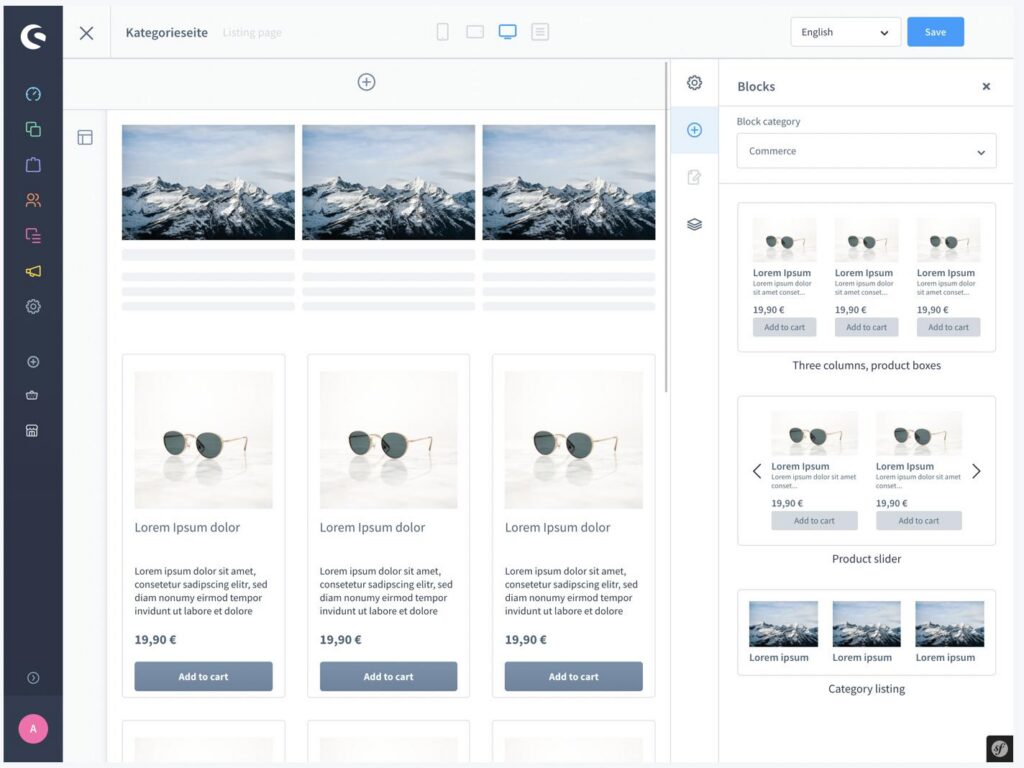
Shopware
A fast-growing platform with powerful CMS capabilities, flexible commerce features, and strong support for both B2C and B2B businesses.
Top 10 Open Source & Free eCommerce Platforms (Detailed Comparison)
Every business has different requirements when choosing an eCommerce platform. A startup with fewer than 100 products will have very different priorities compared to a manufacturer selling globally through multiple storefronts. While all the platforms below are considered among the best open source ecommerce solutions, each one excels in different areas.
The following comparison explores what each platform offers, who it’s best suited for, and the key features that make it stand out.
Bagisto
Best For
- Businesses using Laravel
- Startups planning for future growth
- Developers building bespoke eCommerce websites
Overview
Bagisto is one of the newer entrants in the eCommerce market, but it has gained significant popularity thanks to its Laravel foundation. Unlike traditional platforms that rely heavily on plugins, Bagisto is built using modern development practices, making it easier to customise and maintain.
It offers a clean administration panel, flexible catalogue management, and multi-vendor capabilities straight out of the box. Businesses already investing in Laravel applications often find Bagisto integrates naturally into their existing technology stack.
Although its extension marketplace isn’t as extensive as Magento or WooCommerce, its growing community and modern architecture make it a strong option for businesses wanting a scalable platform without unnecessary complexity.
Key Features
- Laravel framework
- Multi-vendor marketplace
- Multi-warehouse inventory
- Multi-language support
- Multi-currency support
- REST APIs
- Customer groups
- Built-in promotions
Pros
✔ Modern architecture
✔ Developer-friendly
✔ Easy customisation
✔ Lightweight compared to enterprise platforms
Cons
✖ Smaller extension marketplace
✖ Smaller developer community
WooCommerce
Best For
- Small to medium-sized businesses
- Content-focused websites
- Businesses already using WordPress
Overview
WooCommerce remains one of the world’s most widely used eCommerce platforms, powering millions of online stores. Its biggest advantage is that it transforms an existing WordPress website into a fully functional online shop without requiring a complete rebuild.
If content marketing plays an important role in your business, WooCommerce is particularly attractive. WordPress continues to lead the market in blogging, SEO, and content management, making the combination ideal for businesses that rely on organic search traffic.
The platform is free to install and has an enormous ecosystem of plugins and themes. However, as businesses grow, careful optimisation becomes essential to maintain speed and performance.
For businesses planning a high-performing WordPress store, working with a WordPress Development Agency can help ensure the website remains secure, fast, and scalable as traffic increases.
Key Features
- Built on WordPress
- Thousands of plugins
- Large theme marketplace
- SEO-friendly structure
- Flexible payment gateways
- Product variations
- Subscription support
- Membership functionality
Pros
✔ Easy to use
✔ Huge community
✔ Excellent for SEO
✔ Affordable to launch
✔ Ideal for content-driven businesses
Cons
✖ Performance depends on hosting
✖ Plugin conflicts can occur
✖ Large stores require optimisation
Magento (Adobe Commerce Open Source)
Best For
- Large retailers
- Enterprise businesses
- B2B commerce
- International brands
- Businesses expecting rapid growth
Overview
When businesses search for the best free open source ecommerce platform, Magento consistently appears near the top of the list and for good reason.
Magento is designed for businesses that need complete flexibility, exceptional scalability, and advanced functionality. Unlike many platforms that require third-party plugins for enterprise features, Magento includes powerful capabilities such as multi-store management, advanced catalogue rules, customer segmentation, layered navigation, and extensive API support.
Its architecture is built to support complex business operations, making it suitable for manufacturers, wholesalers, distributors, and retailers managing multiple brands or international storefronts.
Magento does have a steeper learning curve than other platforms, but businesses investing in long-term growth often find that its flexibility outweighs the additional development effort.
As a specialist Magento Development Agency, Kiwi Commerce helps businesses build scalable Magento stores that deliver excellent performance, seamless integrations, and exceptional customer experiences.
Key Features
- Multi-store management
- Advanced catalogue management
- Powerful product attributes
- B2B functionality
- Page Builder
- REST & GraphQL APIs
- Multi-source inventory
- Customer segmentation
- Flexible promotions
- Enterprise-grade scalability
Pros
✔ Extremely scalable
✔ Unlimited customisation
✔ Excellent for complex businesses
✔ Strong SEO capabilities
✔ Large global developer community
Cons
✖ Requires experienced developers
✖ Higher development costs
✖ More demanding hosting requirements
Odoo
Best For
- Manufacturers
- Wholesale businesses
- Companies wanting ERP integration
Overview
Unlike most platforms that focus purely on online selling, Odoo combines eCommerce with business management. Inventory, accounting, CRM, purchasing, manufacturing, HR, and customer support can all operate within the same ecosystem.
For businesses currently juggling multiple software systems, Odoo can significantly reduce complexity by centralising operations into one platform.
Its modular approach also allows companies to add new functionality as they grow, making it suitable for businesses planning long-term digital transformation.
Key Features
- ERP integration
- CRM
- Inventory management
- Manufacturing tools
- Accounting
- Marketing automation
- Customer portal
- Multi-company support
Pros
✔ Complete business ecosystem
✔ Excellent automation
✔ Modular architecture
✔ Strong reporting
Cons
✖ eCommerce isn’t its primary focus
✖ Implementation can be complex
PrestaShop
Best For
- SMEs
- International retailers
- Businesses needing flexibility without enterprise complexity
Overview
PrestaShop has been a popular choice for small and medium-sized businesses for many years. It strikes a balance between ease of use and flexibility, making it suitable for retailers that have outgrown basic website builders but don’t yet require an enterprise platform.
One of its greatest strengths is its extensive marketplace of modules and themes, allowing merchants to add functionality without extensive custom development.
It also offers strong multilingual and multi-currency capabilities, making it a practical option for businesses selling internationally.
Key Features
- Multi-language
- Multi-currency
- Extensive module marketplace
- SEO tools
- Product combinations
- Promotions
- Customer groups
- Analytics
Pros
✔ Large community
✔ Good international support
✔ Easy administration
✔ Affordable implementation
Cons
✖ Premium modules can become expensive
✖ Large stores may require optimisation
NopCommerce
Best For
- Microsoft businesses
- B2B companies
- Large catalogues
Overview
Built using ASP.NET Core, NopCommerce is particularly attractive for organisations already invested in Microsoft technologies. It offers excellent security, flexibility, and scalability while remaining completely open source.
Its architecture supports multiple stores, multiple vendors, and advanced customer roles, making it suitable for both B2B and B2C businesses.
Although it has a smaller community than WooCommerce or Magento, it remains one of the strongest. NET-based commerce platforms available.
Key Features
- ASP.NET Core
- Multi-store
- Multi-vendor
- Role-based permissions
- Product attributes
- Advanced security
- Tax management
- API integrations
Pros
✔ Strong Microsoft integration
✔ Excellent security
✔ Stable performance
✔ Good scalability
Cons
✖ Smaller extension marketplace
✖ Fewer developers available
Saleor
Best For
- Headless commerce
- Modern web applications
- Enterprise businesses
Overview
Saleor is one of the fastest-growing headless commerce platforms available today. Rather than controlling the storefront, Saleor focuses on the commerce engine while allowing developers to build completely custom frontends using React, Vue, Next.js, or other frameworks.
This API-first architecture offers greater flexibility, faster user experiences, and easier omnichannel selling.
Businesses planning Progressive Web Apps (PWAs) or composable commerce architectures increasingly choose Saleor because it supports modern development workflows without the limitations of traditional monolithic platforms.
Key Features
- GraphQL API
- Headless architecture
- Multi-channel selling
- Cloud-ready
- Product management
- Order management
- Customer management
- Modern developer tools
Pros
✔ Excellent performance
✔ Highly flexible
✔ Future-ready architecture
✔ Ideal for omnichannel commerce
Cons
✖ Requires experienced developers
✖ Not beginner-friendly
Spree Commerce
Best For
- Ruby on Rails development teams
- Custom enterprise projects
Overview
Spree Commerce is an open-source framework rather than a traditional plug-and-play platform. Built on Ruby on Rails, it provides developers with the flexibility to create highly customised eCommerce experiences tailored to specific business needs.
It is particularly well-suited to organisations with in-house Ruby expertise or agencies delivering bespoke commerce solutions.
Key Features
- Ruby on Rails framework
- API-first architecture
- Modular design
- Multi-store support
- Flexible catalogue management
- Custom checkout flows
Pros
✔ Highly customisable
✔ Lightweight framework
✔ Developer-focused
Cons
✖ Smaller community
✖ Requires Ruby expertise
OpenCart
Best For
- Startups
- Small online retailers
- Businesses with simple product catalogues
Overview
OpenCart has remained a popular option for businesses looking for a straightforward and cost-effective eCommerce solution. It is lightweight, easy to install, and requires fewer server resources than many enterprise platforms.
Its user-friendly interface makes it accessible to beginners, while its marketplace offers a wide selection of extensions for expanding functionality.
Although it may not be ideal for highly complex businesses, OpenCart provides excellent value for smaller retailers seeking a reliable self-hosted solution.
Key Features
- Simple installation
- Multi-store support
- Extension marketplace
- Product management
- Order management
- SEO URLs
- Multiple payment gateways
Pros
✔ Beginner-friendly
✔ Lightweight
✔ Low hosting costs
✔ Easy administration
Cons
✖ Limited enterprise functionality
✖ Smaller ecosystem than WooCommerce
Shopware
Best For
- Mid-sized and enterprise retailers
- European brands
- B2B and D2C businesses
Overview
Shopware has grown rapidly in recent years, particularly across Europe, thanks to its modern architecture and strong focus on customer experience. Its visual CMS, API-first approach, and flexible product management make it suitable for businesses looking to create engaging shopping journeys.
The Community Edition provides an open-source foundation, while commercial editions add advanced business features as requirements evolve.
Businesses comparing hosted and self-hosted platforms often shortlist Shopware alongside Shopify. While Shopify offers a faster route to launch, a specialist Shopify Web Development Company can also help businesses determine whether Shopify or a more flexible self-hosted solution like Shopware is the better long-term investment.
Key Features
- Experience Manager CMS
- API-first architecture
- Rule Builder
- Multi-channel commerce
- B2B Suite
- Shopping Experiences
- Product streams
Pros
✔ Excellent user experience
✔ Modern architecture
✔ Strong CMS capabilities
✔ Enterprise-ready
Cons
✖ Smaller UK developer community
✖ Advanced features require experience
Which Platform Should You Shortlist?
| If You Need… | Consider… |
| The most scalable enterprise platform | Magento |
| A WordPress-powered online store | WooCommerce |
| Laravel-based development | Bagisto |
| ERP and eCommerce in one solution | Odoo |
| Easy setup for SMEs | PrestaShop |
| Microsoft technology stack | NopCommerce |
| Headless commerce | Saleor |
| Ruby on Rails flexibility | Spree Commerce |
| Budget-friendly startup platform | OpenCart |
| Modern European commerce platform | Shopware |
What Is the Difference Between Hosted and Self-Hosted eCommerce?
One of the first decisions you’ll make when launching or upgrading an online store is whether to choose a hosted or self-hosted eCommerce platform. While both options allow you to sell products online, they differ significantly in terms of ownership, flexibility, maintenance, and long-term scalability.
Hosted platforms such as Shopify, Wix, and Squarespace are designed to make launching an online store as simple as possible. The software provider handles hosting, security updates, server maintenance, and platform improvements. This means you can focus on selling rather than managing the technical side of your website.
On the other hand, self-hosted platforms like Magento, WooCommerce, Shopware, Bagisto, and PrestaShop give you complete ownership of your store. You choose where it’s hosted, how it’s configured, which integrations to implement, and how every part of the customer journey works.
For businesses with ambitious growth plans, this level of control often becomes essential. Whether you’re expanding internationally, introducing B2B functionality, or integrating with ERP and warehouse systems, self-hosted platforms provide the flexibility to build a solution around your business rather than adapting your business to fit the platform.
Hosted vs Self-Hosted Comparison
| Feature | Hosted Platforms | Self-Hosted Platforms |
| Hosting Included | ✅ Yes | ❌ No |
| Source Code Access | Limited | Full Access |
| Design Flexibility | Good | Excellent |
| Performance Optimisation | Limited | Full Control |
| Custom Integrations | Limited | Unlimited |
| Server Management | Provider | Business or Agency |
| Security Management | Provider | Business or Agency |
| Monthly Platform Fees | Yes | Usually No (Open Source) |
| Scalability | Moderate to High | Very High |
| Best For | Startups & SMEs | Growing & Enterprise Businesses |
Expert Tip: Hosted platforms are excellent for getting online quickly. However, if your business relies on bespoke functionality, multiple storefronts, advanced customer experiences, or integrations with business systems, a self-hosted solution is often a better long-term investment.
Pros and Cons of Self-Hosted eCommerce
Like any technology decision, self-hosted platforms come with advantages and trade-offs. Understanding both sides will help you choose a solution that aligns with your business goals.
Advantages
Complete Ownership
With a self-hosted platform, your website belongs to you. You control the hosting environment, customer data, source code, and integrations without being restricted by a third-party platform’s limitations.
Unlimited Customisation
Unlike many hosted solutions, open-source platforms allow developers to customise almost every aspect of the website. Whether it’s a bespoke checkout, advanced product configurator, or integration with internal systems, the possibilities are virtually limitless.
Better Long-Term Scalability
As your catalogue grows and traffic increases, your website can scale alongside your business. You’re not restricted by platform-imposed limitations or pricing tiers based on sales volume.
Improved SEO Opportunities
Open-source platforms typically offer greater control over URL structures, metadata, page speed optimisation, structured data, redirects, and technical SEO, helping businesses improve their visibility in search engines.
Greater Integration Flexibility
Modern businesses rely on multiple systems to operate efficiently. Self-hosted platforms make it easier to integrate with:
- ERP systems
- CRM software
- Warehouse management systems
- Marketing automation platforms
- Payment gateways
- Shipping providers
- Accounting software
Considerations
Technical Expertise
Unlike hosted platforms, self-hosted solutions require ongoing management. Businesses either need in-house developers or an experienced agency to maintain the platform.
Hosting Costs
Although many platforms are free to download, businesses still need reliable hosting, backups, monitoring, and security.
Ongoing Maintenance
Software updates, security patches, extension compatibility, and performance optimisation all require regular attention to keep the store running smoothly.
Why Businesses Choose Self-Hosted eCommerce
Many businesses initially choose hosted platforms because they are easy to launch. However, as sales increase and operations become more complex, they often find themselves limited by the platform’s functionality.

This is one of the main reasons growing businesses migrate to self-hosted eCommerce solutions.
For example, a retailer expanding into international markets may need multiple storefronts with different currencies, languages, and tax rules. A wholesaler might require customer-specific pricing, quotation workflows, or ERP integration. Manufacturers may need configurable products with complex pricing structures.
These are areas where self-hosted platforms excel.
Businesses also appreciate the freedom to choose their own hosting infrastructure. Instead of relying on a shared environment controlled by the platform provider, they can invest in hosting that matches their performance and security requirements.
Another key factor is future-proofing. Open-source platforms evolve alongside the needs of the business, allowing new features and integrations to be added over time rather than forcing a complete platform migration.
Which Platform Is Best for Your Business Type?
Choosing the right platform depends less on popularity and more on your business model, budget, technical requirements, and long-term plans.
The table below provides a quick recommendation based on common business scenarios.
| Business Type | Recommended Platform | Why It Fits |
| Startup | OpenCart | Easy to launch, lightweight, budget-friendly |
| Small Business | WooCommerce | Excellent balance of simplicity and flexibility |
| Content-Driven Brand | WooCommerce | Ideal for SEO and blogging |
| Fast-Growing Retailer | Magento | Highly scalable with enterprise features |
| Enterprise Business | Magento | Advanced catalogue, B2B, multi-store capabilities |
| Manufacturer | Odoo | Integrated ERP and operational management |
| B2B Wholesaler | Magento or Shopware | Customer-specific pricing and advanced workflows |
| Laravel-Based Business | Bagisto | Native Laravel framework |
| Microsoft Ecosystem | NopCommerce | Built with ASP.NET Core |
| API-First or Headless Commerce | Saleor | Modern GraphQL architecture |
| Ruby Development Team | Spree Commerce | Flexible Ruby on Rails framework |
| European Retailer | Shopware | Strong CMS and customer experience tools |
Benefits of Open Source eCommerce Platforms
If you’re researching the best free ecommerce software, it’s important to understand that the value of open-source platforms extends far beyond cost savings.
One of the biggest advantages is freedom. Unlike proprietary software, open-source platforms allow businesses to adapt the technology to their exact requirements. You’re not limited to the features included in a subscription plan or tied to a single vendor’s roadmap.
Key Benefits
- No software licence fees for community editions
- Full access to the source code
- Greater flexibility for custom development
- Better scalability for growing businesses
- Extensive developer communities
- Thousands of extensions and integrations
- Improved long-term return on investment
- Better control over security and performance
It’s also worth clarifying a common misconception. Searches such as free online store builders, free online webshop builder, best free online web store, or free website builder with ecommerce often imply that creating an online store is completely free. While many open-source platforms don’t charge licence fees, businesses should still budget for hosting, domain registration, development, maintenance, and ongoing support.
The result, however, is a platform that can be tailored precisely to your business and scaled as your requirements evolve.
Final Thoughts
Choosing an eCommerce platform isn’t just about launching a website it’s about selecting the technology that will support your business over the next five to ten years.
If you’re looking for a quick, low-maintenance solution, hosted platforms like Shopify can be an excellent starting point. However, if your business requires advanced functionality, greater flexibility, or complete ownership of your online store, a self-hosted platform is often the smarter long-term choice.
Among the platforms we’ve covered, WooCommerce remains a fantastic option for content-focused businesses, OpenCart is ideal for startups, and Odoo stands out for organisations wanting integrated business management.
For businesses with ambitious growth plans, though, Magento continues to set the benchmark. Its ability to support multiple storefronts, complex product catalogues, international expansion, and bespoke customer experiences makes it one of the most scalable and future-ready eCommerce platforms available today.
The best platform is ultimately the one that aligns with your business objectives not just where your business is today, but where you expect it to be in the years ahead.
Why Choose Kiwi Commerce?
At Kiwi Commerce, we help businesses build high-performing eCommerce websites that are designed for long-term growth. Whether you’re launching a new online store, migrating from another platform, or modernising an existing website, our experienced team delivers solutions tailored to your business goals.
Our expertise includes:
- Magento Development – Scalable Adobe Commerce and Magento Open Source solutions.
- Shopify Development – Custom Shopify stores for businesses that want a fast and reliable SaaS platform.
- WordPress & WooCommerce Development – SEO-friendly websites and online stores built for performance and growth.
From platform selection and UX design to development, integrations, and ongoing support, we provide end-to-end eCommerce services that help businesses succeed online.

 Ella
Ella