
Introduction
One of the most crucial decisions to make when creating a website is selecting the best CMS. The right content management system can make it easier to create content, enhance SEO, manage users, and scale your business as it expands. From blogs to business sites, portfolios to online stores, there’s a CMS for every need.
There are many choices to choose from, and it can be difficult to find the right website content management software. Some platforms focus on ease of use, while others offer advanced customisation, enterprise-level security, or headless capabilities. The best option will depend on your objectives, technical skills, and future career aspirations.
We’ve done the research and compared the best CMS platforms in terms of usability, SEO, customisation, scalability, and performance. Each platform has its own advantages, but Magento is our top pick for businesses seeking to create robust, scalable, and future-proof eCommerce websites.
What Is a CMS?
A Content Management System (CMS) is a piece of software that enables users to create, edit, organise, and publish content on a website without needing to have a lot of coding knowledge. A CMS offers a user-friendly dashboard to handle text, images, products, and other website components, rather than having to build web pages manually.
There are various types of CMS platforms today, such as traditional CMS, headless CMS, and eCommerce CMS. Some are created for blogging, others for enterprise websites or online stores. The selection of the right CMS will depend on the purpose of your website, the amount of traffic you expect, and your long-term business objectives.
1. Magento
When it comes to the best CMS to build a scalable online business, Magento is the top choice. Designed specifically for eCommerce, Magento offers unmatched flexibility, advanced customisation, and enterprise-grade performance. It offers businesses full control over their online stores, unlike many website builders, and is perfect for brands looking to grow in the long term. Partnering with an experienced Magento development agency can also help businesses unlock the platform’s full potential through tailored development, seamless integrations, and ongoing optimisation.
Some of the most powerful features of Magento include multi-store management, advanced product catalogues, customer segmentation, built-in SEO tools, and support for multiple languages and currencies. It also integrates with ERPs, CRMs, payment gateways, and shipping providers, making it ideal for businesses with complex needs.
One of its other key benefits is its ability to support headless commerce. Contentful and Strapi are widely used platforms for content-driven headless applications, but Magento can be used to create fast, modern storefronts with GraphQL APIs and front-end frameworks such as React or Next.js. This is a good choice for companies looking into modern digital commerce.
Pros
- Highly scalable
- Excellent SEO features
- Multi-store support
- Advanced customisation
- Headless commerce ready
Cons
- Requires development expertise
- Higher setup costs than beginner platforms
2. WordPress
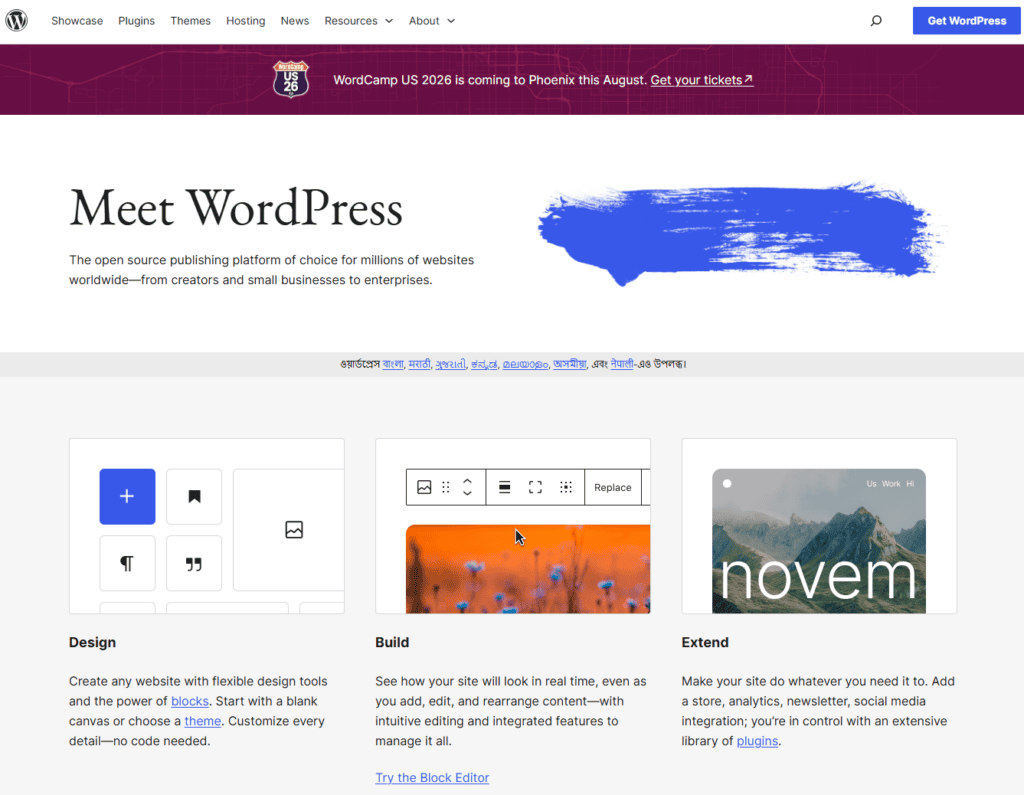
WordPress is one of the most popular CMS platforms in the world and is regarded as the best CMS for SEO. Content optimisation for search engines is easy, even for novices, thanks to plugins such as Yoast SEO and Rank Math.
It is extremely flexible, with a huge theme and plugin library, and can be used to create blogs, business websites, portfolios, and even online stores with WooCommerce. It might not have the same level of commerce features as Magento, but WordPress is still a great option for content-driven sites. But choosing an experienced WordPress development Company is a really important part of making a great experience for both users and businesses.
3. Shopify
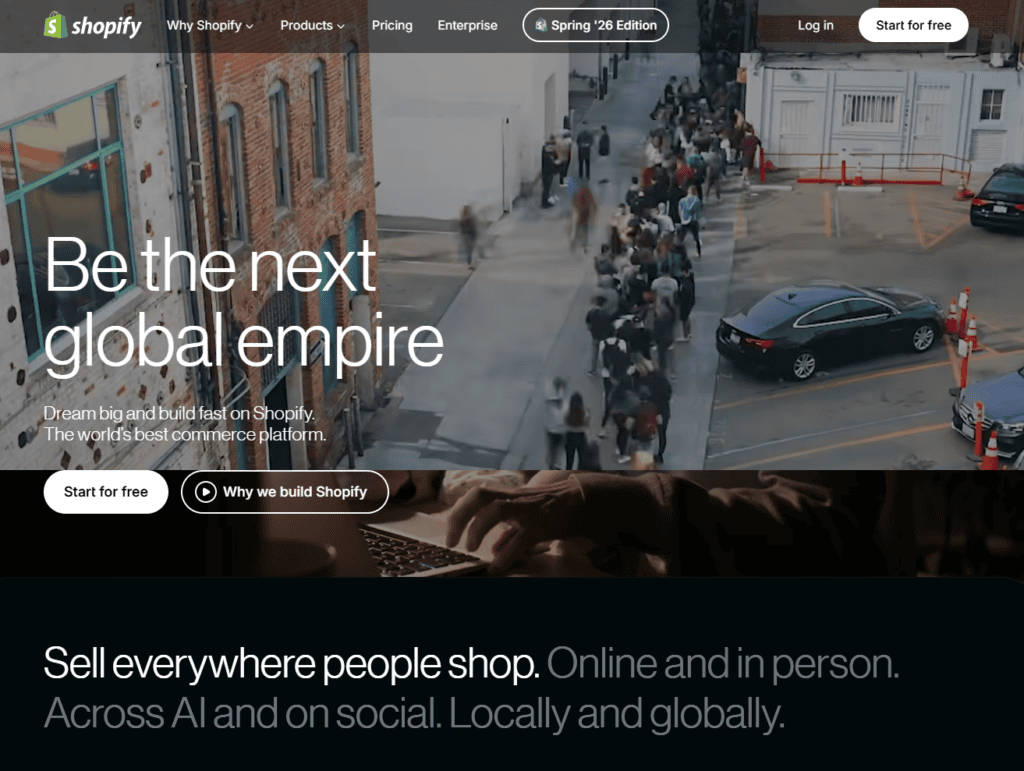
Shopify is among the most user-friendly platforms to start an online store. It is a fully hosted solution, meaning that it takes care of hosting, security, updates, and maintenance, freeing up time for business owners to concentrate on selling. It is a popular choice for entrepreneurs and growing brands due to its intuitive dashboard and a huge app marketplace.
It also has built-in SEO tools, secure payment processing, inventory management, and mobile-friendly themes. Shopify is user-friendly, but it might not be the best platform for businesses with more complex workflows or advanced customisation requirements. If you need more flexibility and scalability, Magento offers more control over all aspects of the store.
Working with a Shopify development agency can also help businesses customise their stores, integrate third-party tools, and optimise performance as they scale.
4. Contentful
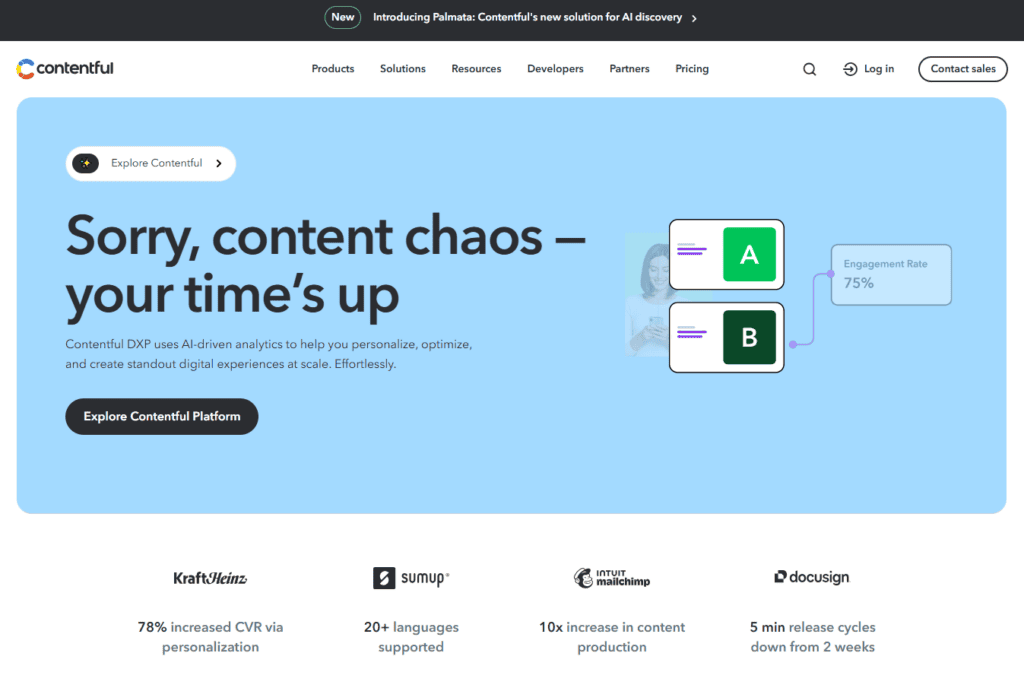
If you’re searching for the best headless CMS, Contentful is one of the leading options available. Unlike conventional CMS platforms, it separates content from the front end, enabling developers to provide content via APIs to websites, mobile apps, digital displays, and more.
Contentful is highly scalable and suitable for businesses that have content across various digital channels. It is not as beginner-friendly as other options, however, because it requires developer skills to create the frontend. Contentful is great for content management, but for businesses seeking headless commerce, Magento’s commerce capabilities and its API support make it a popular choice.
5. Drupal
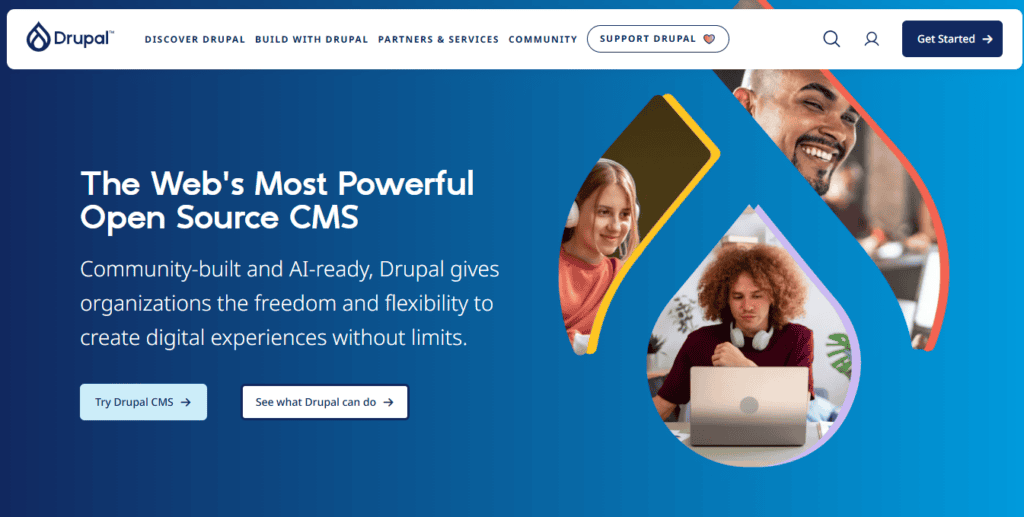
Drupal is a trusted platform for government organisations, universities, and large enterprises, thanks to its robust security and flexibility. It provides advanced user permissions, multilingual support, and robust content management features that make it easy to manage complex websites.
While Drupal offers great customisation capabilities, it is more difficult to learn than some other CMS platforms. It might be more difficult to implement than WordPress or Shopify for businesses that don’t have their own developers.
6. Storyblok
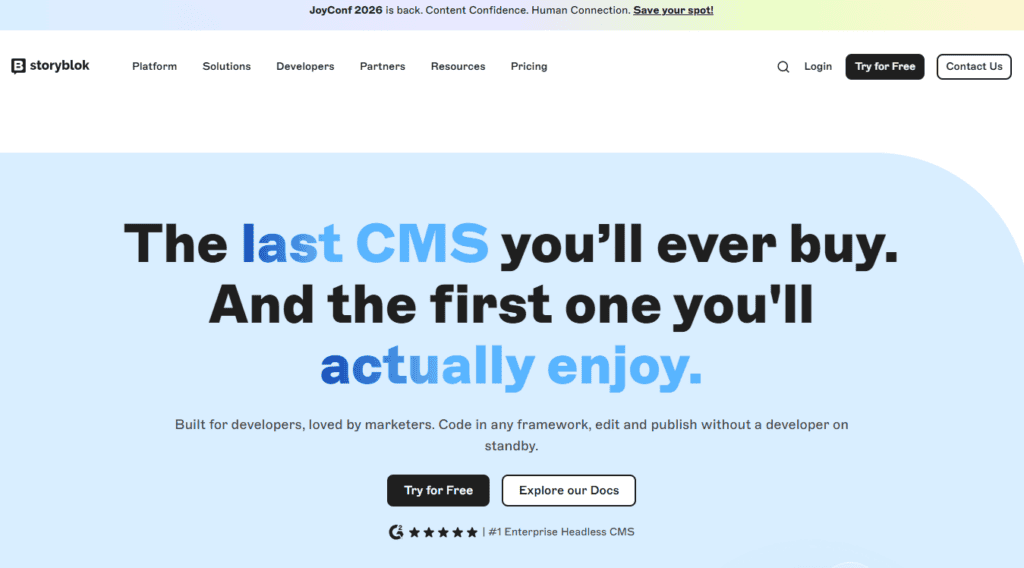
Storyblok is a popular headless CMS that combines the flexibility of API-first content management with an intuitive visual editor. This makes it easier for both developers and content teams to collaborate, allowing marketers to preview changes before publishing while developers retain complete frontend flexibility.
As one of the best headless CMS platforms, Storyblok supports omnichannel content delivery across websites, mobile apps, and other digital platforms. It integrates seamlessly with modern frameworks like Next.js, Nuxt, React, and Vue, making it a great choice for businesses building fast, scalable digital experiences.
7. BigCommerce
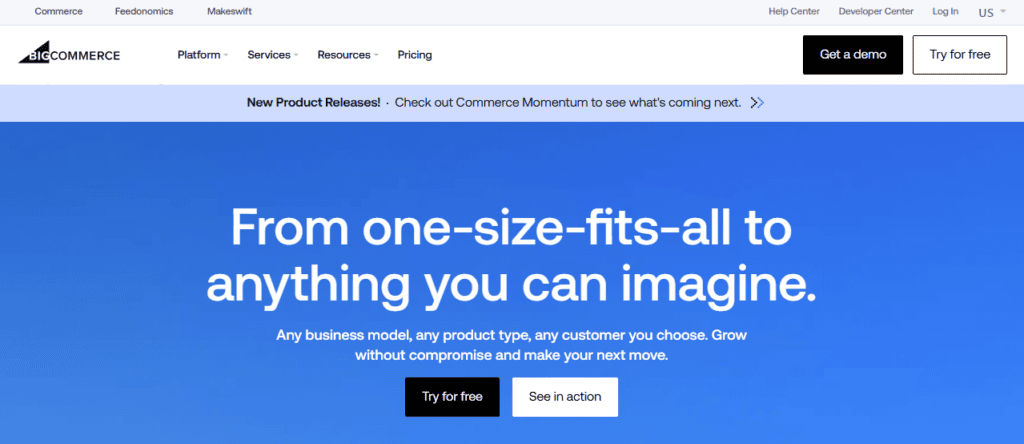
BigCommerce is an eCommerce platform with a lot of features for companies that require more features than some of the other hosted platforms. It features multi-channel selling, inventory management, advanced analytics, and international commerce capabilities, but doesn’t require a lot of third-party apps.
The platform also offers headless commerce, which enables developers to build their own storefronts and leverage BigCommerce as the back end. While it’s a great choice for growing businesses, Magento is still the superior choice for organisations that require more customisation and enterprise-level flexibility.
8. Joomla
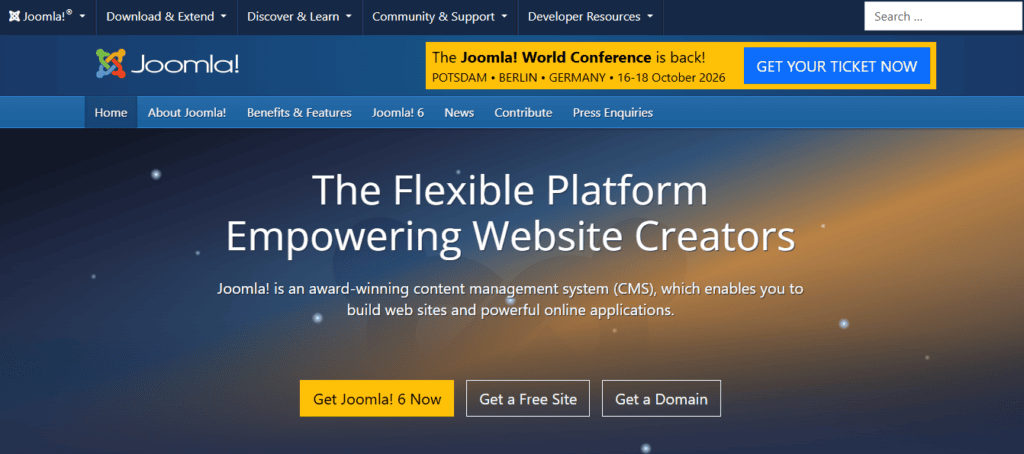
Joomla is a versatile CMS that sits between WordPress and Drupal in terms of flexibility and complexity. It offers more built-in functionality than WordPress while remaining easier to manage than Drupal, making it a solid choice for businesses that need advanced content management without a steep learning curve.
The platform supports multilingual websites, user access controls, and thousands of extensions for added functionality. Although its ecosystem isn’t as large as WordPress, Joomla remains a reliable option for business websites, membership portals, and community-driven platforms.
9. Wix
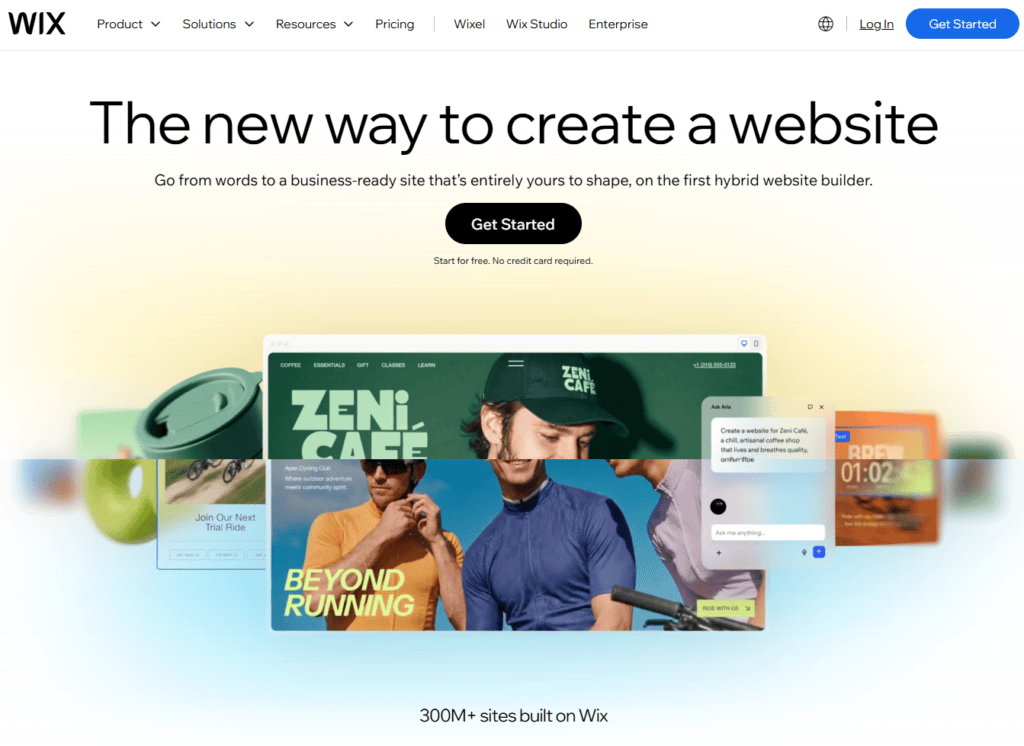
Wix is a beginner-friendly website builder that makes creating a professional website simple. Its drag-and-drop editor, ready-made templates, and built-in hosting allow users to launch websites quickly without any coding experience.
It also includes basic SEO tools, eCommerce features, and an app marketplace for additional functionality. While Wix is ideal for small businesses and personal websites, it may feel restrictive for companies planning significant growth or requiring advanced customisation.
10. Squarespace
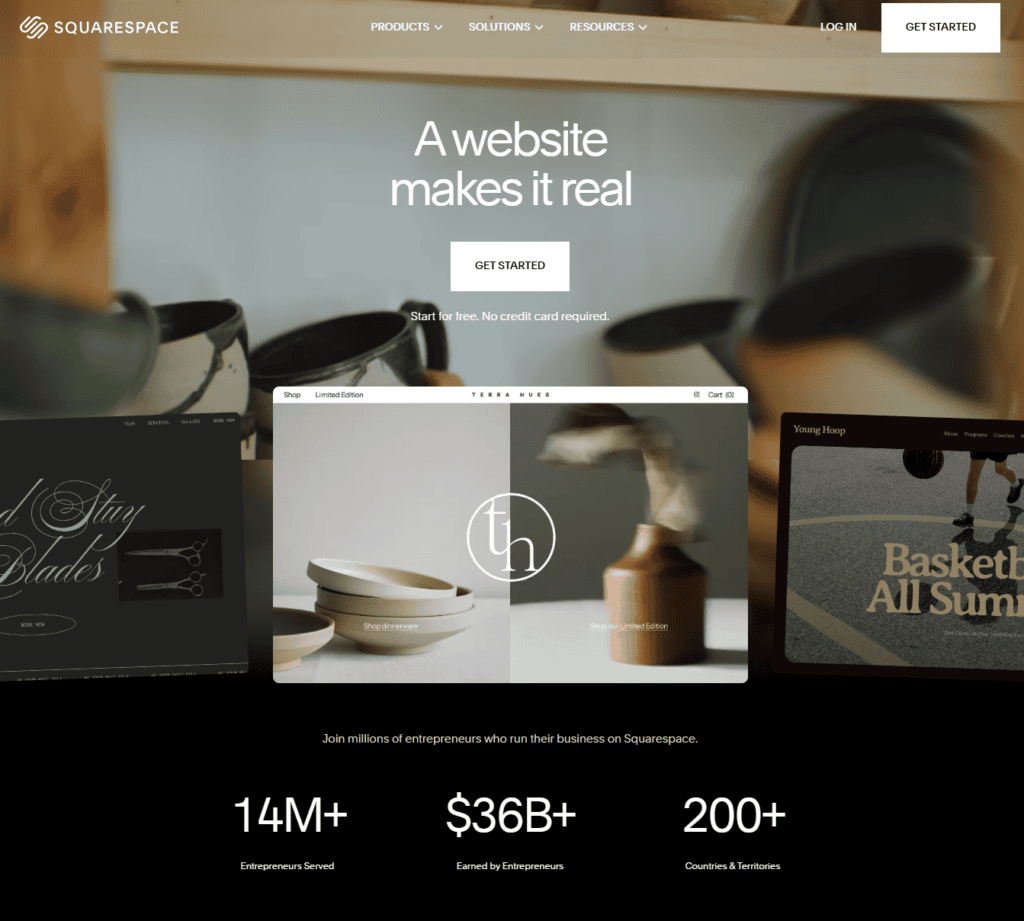
Squarespace is known for its beautifully designed templates and polished user experience. It’s an excellent choice for photographers, designers, agencies, and creatives who want visually appealing websites without spending time on complex development.
Beyond design, Squarespace includes blogging tools, eCommerce functionality, analytics, and built-in marketing features. However, compared to platforms like Magento or WordPress, it offers less flexibility for businesses with advanced customisation needs.
Final Verdict
Every CMS on this list offers unique advantages, and the right choice depends on your business goals.
- Magento is the best choice for businesses that need a scalable and feature-rich eCommerce platform.
- WordPress is ideal for blogs and content-heavy websites.
- Contentful and Strapi are excellent for headless projects.
- Shopify and BigCommerce simplify online selling.
- Drupal is perfect for security-focused organisations.
- Joomla, Wix, and Squarespace cater to businesses looking for flexibility and ease of use.
If we had to choose one platform as the best CMS overall, Magento takes the top spot. Its advanced customisation, enterprise-grade scalability, powerful SEO capabilities, multi-store support, and headless commerce functionality make it an outstanding investment for businesses that want to grow without platform limitations. While every platform serves a purpose, Magento offers the strongest combination of flexibility, performance, and long-term value for serious eCommerce businesses.
If you’re planning to build or upgrade your online store, partnering with Kiwi Commerce & their Website development experts can help you create a scalable, high-performing eCommerce solution tailored to your business goals.

 Krish
Krish