
Introduction
Customer retention has become one of the biggest challenges for ecommerce brands in the UK. Rising advertising costs, changing customer expectations, and growing competition mean that businesses can no longer rely only on attracting new visitors. Instead, brands need to focus on keeping existing customers engaged and encouraging repeat purchases. This is where customer loyalty programs play an important role.
A loyalty program is a marketing strategy used by businesses to encourage repeat customers by offering incentives such as discounts and rewards. Whether you run a Shopify store, Magento website, or a custom ecommerce platform, the right loyalty program system can increase customer retention, improve average order value, and strengthen brand trust.
In this guide, we explain what a customer loyalty program is, how loyalty programs work, which loyalty program is best for different businesses, and how to build a customer loyalty program that genuinely delivers results.
What is a customer loyalty program?
A customer loyalty program is a structured rewards system designed to encourage customers to shop repeatedly with the same brand. Businesses reward customers for actions such as purchases, referrals, reviews, or social engagement.
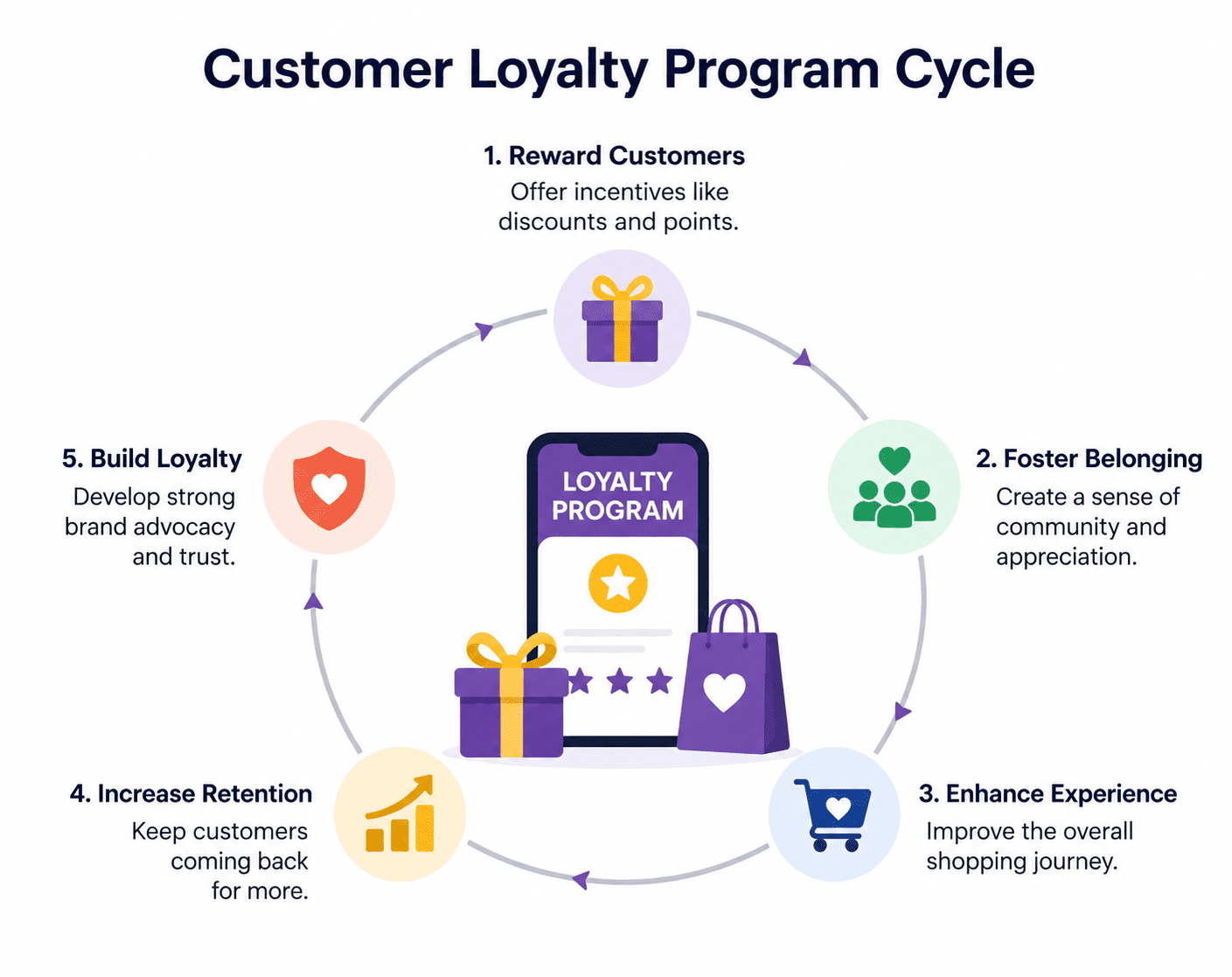
The aim is simple: build long-term customer relationships instead of focusing only on one-time sales.
Popular examples of customer loyalty program strategies include:
| Loyalty Activity | Reward Example | Business Benefit |
| Repeat purchases | Earn points per order | Increased retention |
| Referrals | Discount vouchers | New customer acquisition |
| Product reviews | Bonus rewards | Improved trust |
| Membership subscription | Exclusive access | Predictable recurring revenue |
| VIP spending levels | Tier upgrades | Higher average order value |
Brands like Sephora, Starbucks, and Amazon Prime have shown how powerful loyalty programs can be when executed correctly.
How do loyalty programs work?
Many ecommerce businesses ask: how do loyalty programs work?
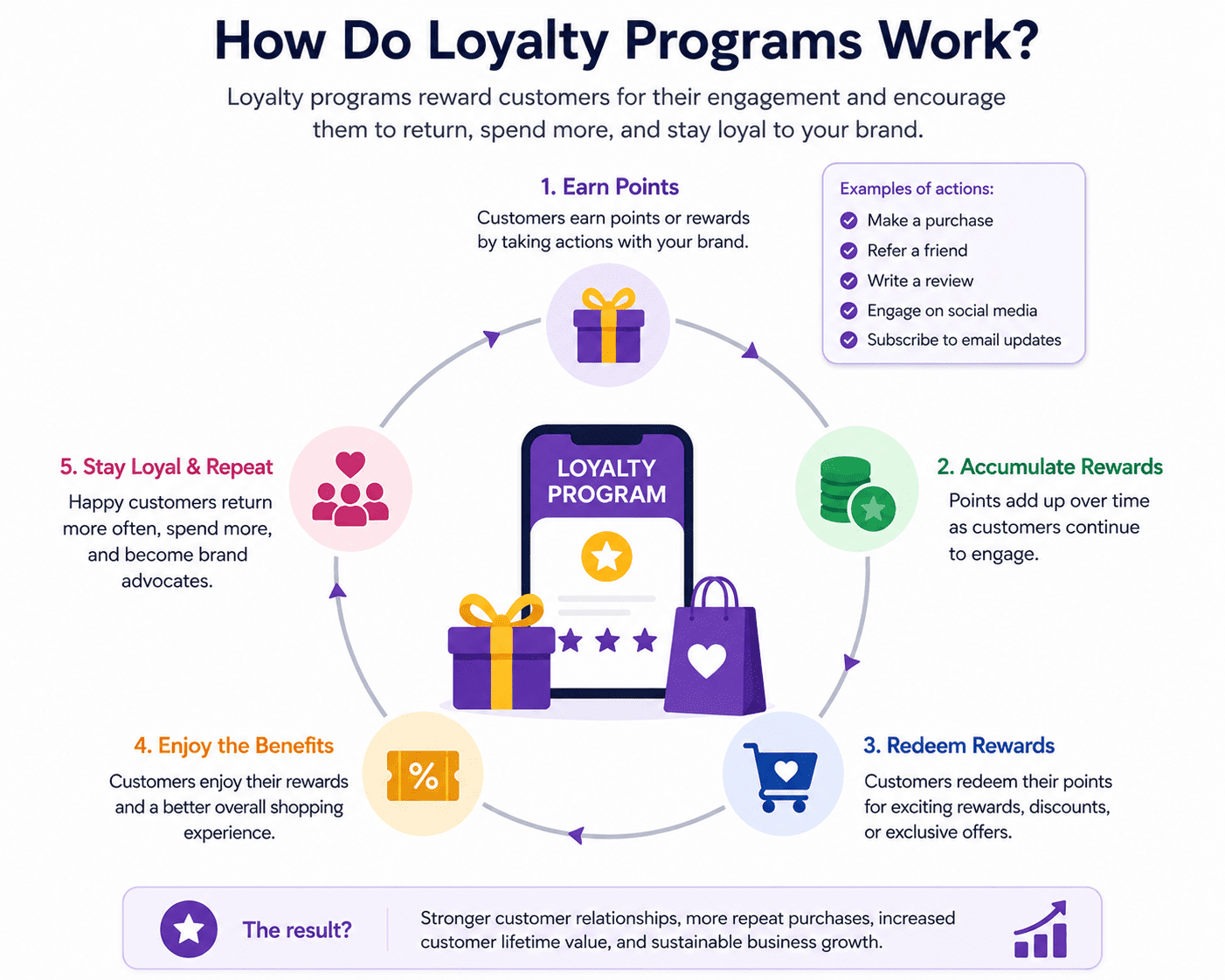
The process is usually straightforward. Customers sign up for the loyalty program through the website or app. Every interaction earns rewards, points, discounts, or exclusive benefits. Customers then redeem these rewards during future purchases.
Typical Loyalty Program Flow
Customer Purchase
↓
Earn Points or Rewards
↓
Track Progress in Account
↓
Redeem Rewards
↓
Repeat Purchase
↓
Increased Customer Loyalty
The success of loyalty program software depends on simplicity. If customers struggle to understand how rewards work, engagement drops quickly.
Types of loyalty programs
There are many ways to structure a loyalty program system depending on your business goals, customer base, and products.
The four types of customer loyalty programs are:
1. Points
Points-based systems are the most common type of customer loyalty program. Customers earn points every time they purchase products.
Example:
- £1 spent = 1 point
- 100 points = £10 reward
This model works well for fashion, beauty, and lifestyle ecommerce stores where customers purchase regularly.
2. Tiered
Tiered loyalty programs reward customers based on spending levels or engagement.
| Tier | Customer Spend | Rewards |
| Silver | £0–£250 | Standard discounts |
| Gold | £250–£1000 | Early product access |
| Platinum | £1000+ | VIP support & exclusive offers |
Tiered systems help brands build customer loyalty by making customers feel valued.
3. Subscription
Subscription loyalty models charge customers a recurring fee for premium benefits.
Amazon Prime is one of the best-known examples of customer loyalty program models using subscriptions.
Benefits may include:
- Free delivery
- Exclusive products
- Early access to sales
- Priority customer support
4. Value
Value-based loyalty programs connect with customers emotionally rather than financially.
For example, a brand may donate part of every order to charity or support sustainability initiatives.
This model works particularly well for modern consumers who care about ethical shopping.
Benefits of implementing a customer loyalty program
Businesses that invest in loyalty program features often see improvements across multiple areas.
| Business Area | Impact of Loyalty Program |
| Customer retention | Higher repeat purchase rates |
| Revenue | Increased lifetime value |
| Marketing costs | Lower customer acquisition costs |
| Brand awareness | More referrals and advocacy |
| Customer engagement | Stronger long-term relationships |
Research consistently shows that retaining existing customers costs less than acquiring new ones.
A step-by-step guide to creating a customer loyalty program
1. Choose what you want your loyalty program to be
Before launching a rewards system, decide your objectives.
Do you want to:
- Increase repeat purchases?
- Boost referrals?
- Improve customer engagement?
- Increase subscription revenue?
Your business goals will shape the loyalty program software and features you choose.
2. Set rewards and incentives
The rewards need to feel genuinely worthwhile.
Examples include:
- Percentage discounts
- Free delivery
- Exclusive products
- Birthday rewards
- Early sale access
- Referral bonuses
Example Reward Structure
| Customer Action | Reward |
| Create account | 50 points |
| Place first order | 100 points |
| Refer a friend | £15 voucher |
| Leave review | 25 points |
3. Share the program with customers
Even the best loyalty program system fails if customers do not know it exists.
Promote your rewards program through:
- Email marketing
- Homepage banners
- Checkout messaging
- Social media
- SMS campaigns
Visibility is critical when learning how to create a rewards program successfully.
4. Explore partnerships
Some ecommerce businesses partner with complementary brands to expand rewards options.
For example:
- Fitness brands partnering with nutrition companies
- Fashion stores partnering with beauty brands
- Travel companies partnering with hotels
Partnerships help make a loyalty program feel more valuable.
Best practices and tips for any customer loyalty program
Make the program feel valuable
Customers should clearly understand the benefit of joining.
Avoid overly complicated rules or difficult redemption systems.
Keep your focus on the customer
Successful loyalty program best practices always focus on customer experience rather than only business goals.
Ask:
- What motivates customers?
- What rewards matter most?
- How easy is the program to use?
Measure the success of the program and adjust
Track metrics such as:
- Repeat purchase rate
- Redemption rate
- Customer lifetime value
- Referral growth
If engagement drops, adjust rewards or simplify the process.
Reasons to have a customer loyalty program
Businesses implement loyalty systems because they:
- Increase customer retention
- Encourage larger basket sizes
- Improve brand loyalty
- Generate referrals
- Reduce marketing spend over time
Benefits for customers
Customers benefit from loyalty programs through:
- Exclusive rewards
- Better shopping experiences
- Faster service
- Personalised offers
- VIP access
When done properly, customers feel appreciated rather than marketed to.
Loyalty Program Integration for Ecommerce Platforms
Different ecommerce platforms support different loyalty program software solutions.
Shopify Loyalty Program Integration
Shopify merchants can integrate loyalty apps and custom systems easily. Businesses working with a Shopify website development company can build advanced rewards systems integrated with CRM, email marketing, and subscriptions.
Popular Shopify loyalty program features include:
- Points systems
- Referral tracking
- VIP tiers
- Automated rewards
Magento Loyalty Program Development
Magento offers more flexibility for businesses needing highly customised loyalty functionality. A specialist Magento development agency can develop complex loyalty engines tailored for enterprise businesses.
Magento is often preferred for:
- Multi-store setups
- Advanced customer segmentation
- Complex promotions
- API integrations
Custom-built Loyalty Systems (API-based)
Some enterprises require fully customised loyalty program software connected to:
- ERP systems
- POS systems
- Mobile apps
- Subscription platforms
API-based systems allow businesses to create unique customer experiences.
How loyalty programs help small businesses
Small businesses often struggle with customer acquisition costs.
A simple rewards system helps smaller brands:
- Build customer trust
- Encourage repeat orders
- Compete with larger retailers
- Improve retention affordably
Even basic point-based systems can produce strong results.
How loyalty programs help medium-sized businesses
Medium-sized ecommerce businesses usually focus on scaling retention.
Loyalty systems help them:
- Increase average order value
- Segment customer groups
- Improve email marketing performance
- Encourage referrals
This stage often benefits from more advanced loyalty program features.
How loyalty programs help enterprises
Enterprise brands use sophisticated loyalty systems to manage millions of customer interactions.
These systems often include:
- AI-driven personalisation
- Omnichannel integration
- Mobile app rewards
- Real-time customer analytics
Enterprise loyalty programs are heavily data-driven.
How much does it cost to start a customer rewards program?
The cost depends on complexity and platform requirements.
| Cost Area | Estimated UK Cost |
| Strategy and design | £1,000–£5,000 |
| Technology costs | £500–£10,000+ |
| Ongoing program management | Monthly operational costs |
| Points liability | Variable |
| Offers and promotions | Based on campaign budgets |
Strategy and design
Planning the program structure, customer journeys, and rewards system.
Technology costs
Includes loyalty program software, integrations, and platform development.
Ongoing program management
Monitoring customer engagement, updating offers, and maintaining the system.
Points liability
Businesses must account for unused rewards as financial liabilities.
Offers, promotions and rebates
Regular campaigns help keep customers engaged long-term.
How to build a customer loyalty program
Recommended Loyalty Program Process
Define Goals
↓
Choose Program Type
↓
Select Technology
↓
Create Rewards Structure
↓
Launch Marketing Campaign
↓
Track Performance
↓
Optimise & Improve
The most successful businesses treat loyalty programs as long-term retention strategies rather than short-term sales tactics.
Do Loyalty Programs Increase Sales?
Yes, when implemented correctly.
Businesses with strong loyalty systems often experience:
- Higher repeat purchases
- Increased average order values
- Better customer retention
- More referrals
- Improved customer satisfaction
However, why loyalty programs fail usually comes down to:
- Complicated reward systems
- Poor customer communication
- Weak rewards
- Lack of personalisation
- Difficult redemption processes
The best loyalty program software focuses on simplicity, transparency, and customer value.
Conclusion
Customer loyalty programs are no longer optional for ecommerce businesses looking to grow sustainably. Whether you run a small online shop or a large enterprise platform, the right loyalty program system can help increase customer retention, improve sales, and strengthen brand loyalty.
Understanding what a loyalty program is and learning how to make a loyalty program successfully requires more than simply offering discounts. Businesses must create experiences that customers genuinely value.
From Shopify stores to Magento websites and fully custom ecommerce solutions, loyalty programs continue to be one of the most effective ways to build customer loyalty and encourage long-term growth.

 Amy
Amy