
Introduction
Shopify dropshipping puts a profitable store in your hands with zero inventory, no warehouse, and no upfront stock costs. You list products, a customer buys, your supplier ships. That’s the whole model. But building a store that actually makes money takes more than just signing up and importing a few products.
Whether you’re figuring out how to start Shopify dropshipping from scratch or want to understand what is dropshipping Shopify-style before you commit, this guide gives you exactly what you need to build a store the right way, from choosing a niche and connecting powerful tools like AutoDS, to setting up payments and scaling what works.
What Is Shopify Dropshipping?
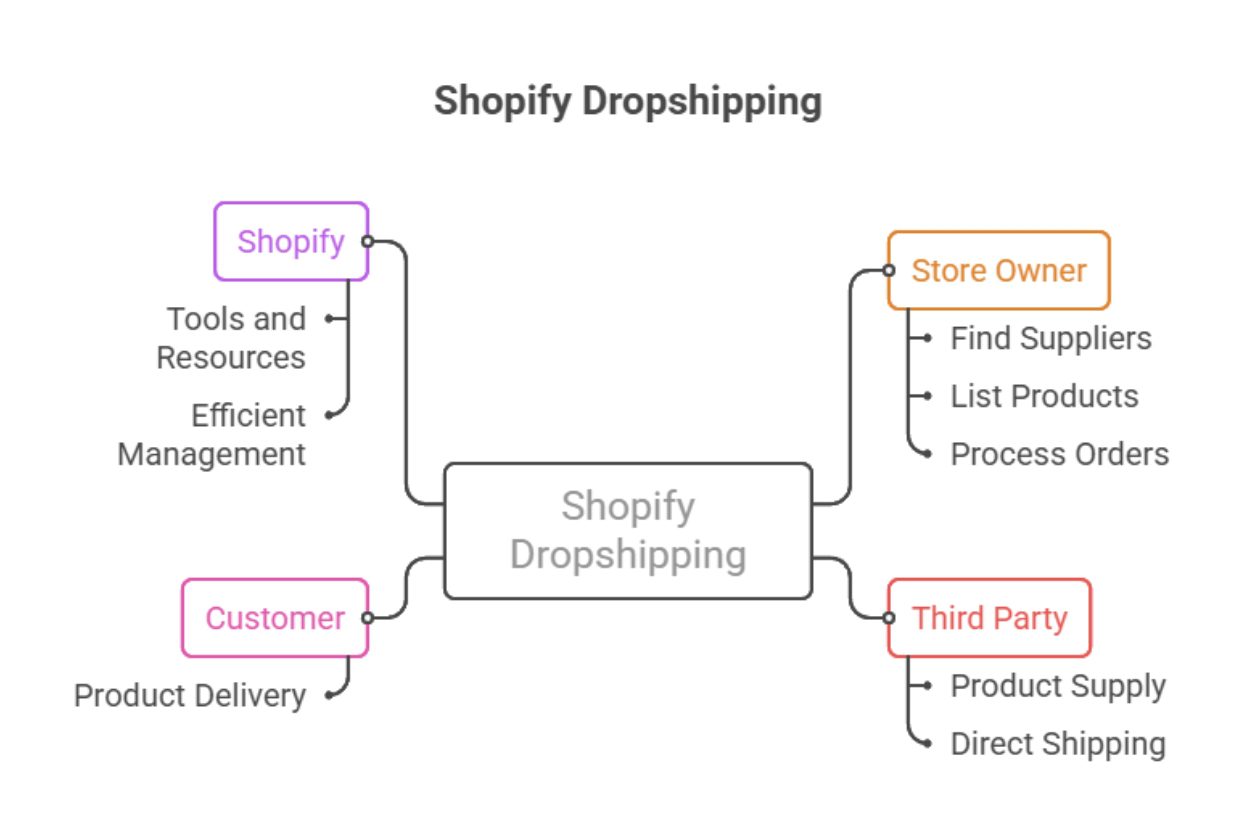 It’s a business model where you run an online store on Shopify while a third-party supplier manages stock, packing, and shipping. When a customer places an order, the supplier fulfils it directly, meaning you never handle the product yourself.
Shopify provides the storefront, product pages, checkout, and customer experience, while supplier apps and fulfilment tools power the operational side. This combination is what people mean by shopify dropshipping running an eCommerce business on Shopify with third-party fulfilment.
Although suppliers manage logistics, you’re still responsible for marketing, pricing, customer service, refunds, and brand growth. Successful Shopify dropshipping stores treat it as a real business, not a hands-off income stream.
How Dropshipping Works on Shopify
Here’s the basic order flow:
- A customer visits your Shopify store and places an order.
- The order is automatically forwarded to your dropshipping supplier (via an app like AutoDS, DSers, or Spocket).
- The supplier processes and ships the order directly to your customer.
- You keep the difference between your retail price and the supplier’s wholesale cost.
The supplier manages warehousing, packing, and posting. Most dropshipping apps keep your Shopify inventory synced in real time, so if a supplier runs out of stock, your product listings update automatically. That’s the core of how Shopify dropshipping works, and why it’s become the go-to model for dropshipping for Shopify sellers who want low overhead and maximum flexibility.
How to Dropship on Shopify in 7 Steps
If you want to know how to start dropshipping step by step, this section covers everything from niche selection to building customer trust.
1. Select a Niche for Your Dropshipping Business
Start here before you touch Shopify. Picking the right niche saves you months of wasted effort.
A good dropshipping niche has a few things going for it: consistent search demand, a defined audience, and products with enough margin to cover your ads and still turn a profit. Think about what you genuinely understand, pet accessories, home organisation, fitness gear, outdoor kit. Passion matters less than market knowledge.
Avoid overly saturated general categories unless you have a strong angle. “Phone cases” is a tough market. “Phone cases for outdoor workers who need rugged protection” is a niche with a clear buyer.
Use Google Trends, TikTok’s trending products section, and tools like Minea or Sell The Trend to spot products gaining traction before they peak. Look for items that solve a specific problem, photograph well, and don’t weigh so much that shipping costs kill your margin.
Also think about seasonality. Seasonal products can generate big spikes but make for a bumpy income unless you rotate your catalogue.
2. Set up your Shopify dropshipping store
Go to Shopify.com and start a free trial. If you’re wondering how to start dropshipping on Shopify, this is step one your store is where everything else plugs in. You’ll be guided through the basics: store name, country, currency, and a few details about your business.
When you’re learning how to set up your Shopify store for dropshipping, the critical early decisions are:
- Domain name. Buy a custom domain through Shopify or connect one from a registrar. Avoid generic names; something memorable and niche-relevant works better.
- Shopify plan. The Basic plan is enough to get started. You can upgrade later as revenue grows.
- Payment providers. Shopify Payments is the simplest option for UK sellers; it removes transaction fees and supports major cards plus Shop Pay. PayPal is worth adding as a secondary option.
- Shipping settings. Understanding how to set up shipping on Shopify for dropshipping matters more than most beginners expect. Set realistic rate expectations. With overseas suppliers, delivery can take 7 to 21 days. Be transparent about this from day one.
Don’t overthink the setup at this stage. If you’ve been wondering how to make a dropshipping website, Shopify’s trial gives you the fastest route from zero to a live store. Get the fundamentals in place, then refine as you learn what your customers actually want.
3. Select your dropshipping supplier
Your supplier relationship is the backbone of your store. Understanding how to set up dropshipping on Shopify properly, including how to dropship from Shopify to your customers with minimal delays, starts here. A poor supplier means slow shipping, inconsistent quality, and the kind of customer complaints that sink a new business quickly.
Here’s how to approach supplier selection properly:
Start with a shortlist. Platforms like AliExpress, Spocket, Zendrop, and CJdropshipping all integrate directly with Shopify. For UK-focused stores, Spocket and Avasam carry more UK and EU-based suppliers, which means faster domestic shipping and a real competitive edge.
Check real reviews. Don’t just look at a supplier’s star rating. Read the actual feedback. Look for comments on packaging quality, dispatch speed, and how they handle problems.
Order samples. Before you list anything, buy it yourself. Check the quality, the packaging, the condition it arrives in, and how long it actually takes. What’s advertised as 5-day shipping is sometimes 12 days in practise.
Understand their policies. What’s the returns process? Who covers the cost of damaged items? What happens if a product is out of stock mid-order? Get clear answers before you commit.
Think about margin. Work out whether there’s enough space between what the supplier charges and what customers will pay to cover your ads, Shopify fees, and still leave a profit. Do the maths on every product category before you list.
One supplier is fine to start. As you scale, spreading across two or three reduces your exposure to any single point of failure. A common question at this stage is: how can I manage dropshipping suppliers effectively? The answer is keeping communication clear, checking order dashboards daily, and using your dropshipping app’s supplier management tools to track performance over time.
4. Design and import products
Once your supplier is sorted, you need to get products into your store. Knowing how to add dropshipping products to Shopify properly from the start saves you a lot of rework later.
The best dropshipping app for Shopify depends on your supplier, but AutoDS, DSers, and Spocket all do a solid job of automating product imports. Learning how to add products to Shopify from AutoDS, for example, is straightforward: connect your AutoDS account, browse the supplier catalogue, and push selected products directly to your Shopify store with one click.
Before anything goes live, rewrite every product title and description. A well-optimised Shopify store for dropshipping needs product copy written for real customers, not wholesale buyers. Supplier copy is usually full of spelling errors, odd phrasing, or missing information. Rewrite in plain English, focus on the benefit to the buyer, and make sure every page has a clear call to action.
Product images matter enormously. Use the supplier’s images as a starting point, but where possible, order the product and shoot your own. Lifestyle images consistently outperform plain product-on-white photos.
Set your prices carefully. Work backwards from your target margin. Factor in Shopify’s transaction fees (or Shopify Payments fees), any app subscription costs, and your expected ad spend per sale.
5. Customise your online store
Your Shopify theme is the first thing customers see. It needs to look trustworthy, load quickly, and make buying easy. Learning how to use Shopify dropshipping tools effectively, including themes, apps, and checkout settings, is where the real setup work happens.
Shopify’s free themes (Dawn, Craft, Sense) are all solid starting points. They’re mobile-optimised, fast-loading, and built for conversion. For Shopify dropshipping for beginners, these free themes are more than adequate. Paid themes offer more flexibility, but most new dropshippers don’t need them yet.
Key customisation priorities:
- Homepage. Clear headline, strong hero image, featured products, and social proof (reviews or trust badges).
- Product pages. Detailed descriptions, multiple images, clear pricing, shipping info, and customer reviews.
- Navigation. Keep it simple. Header, collection pages, and a clear checkout path.
- Trust signals. Add a returns policy page, a contact page, and security badges at checkout. Customers are cautious about buying from unfamiliar stores; small trust signals make a real difference.
- About page. Even a simple “who we are” page adds credibility. Anonymous stores feel risky. Stores with a face and a story feel safer.
If design isn’t your strength and you want something built properly from day one, our Shopify web development team can build you a bespoke store that’s structured for both conversion and search visibility.
6. Market products and build your audience
A well-built store with no traffic earns nothing. Marketing is where most dropshippers either invest wisely or burn their budget fast. Knowing how to do dropshipping with Shopify is one thing; knowing how to start dropshipping with Shopify profitably means getting your marketing channels right from the beginning.
Paid social (Meta and TikTok ads) is the most common starting point. Low budgets, fast feedback, and the ability to test multiple products quickly. Start small and cut what isn’t converting within 48 to 72 hours.
Organic content takes longer but compounds. TikTok and Instagram Reels give new accounts organic reach that paid channels can’t match. Short, honest product demos often outperform polished ad creative.
SEO matters more than most dropshippers realise. A well-structured Shopify store with good on-page SEO can bring in consistent free traffic over time. This means proper page titles, meta descriptions, descriptive product copy, and collection pages built around real search terms. Our Shopify Performance Optimisation service is worth exploring once your store has a product range worth ranking for.
Email marketing – Start collecting email addresses from day one, even before your first sale. A simple welcome sequence and abandoned cart email can recover a meaningful percentage of lost sales with very little ongoing effort.
Don’t try every channel at once. Pick one or two, get good at them, then add more.
7. Build trust
Trust is the one thing you can’t shortcut. Customers buying from a store they’ve never heard of are already slightly cautious. Every element of your store either builds or undermines that trust.
Practical trust-building moves:
- Display real reviews. Import supplier reviews as a starting point using an app like Judge.me or Loox, but actively collect your own verified purchase reviews as orders come in.
- Be specific about shipping. Vague “estimated delivery times” frustrate customers. Clear, honest shipping windows, even if they’re longer than you’d like, reduce support tickets and refund requests.
- Make contact easy. A visible email address, a contact form, and ideally a live chat widget signal that a real business is behind the store.
- Have a clear returns policy. Customers are more likely to buy when they know what happens if something goes wrong.
- Respond quickly. First-time dropshipping customers often have questions. A fast, helpful response builds the kind of loyalty that generates repeat purchases.
Dropshipping Challenges & How to Overcome Them in 2026
Dropshipping isn’t as passive as some tutorials make it sound. Many people research how to do dropshipping on Shopify expecting it to run itself, but successful Shopify stores dropshipping products profitably still require active management. Here are the real challenges and how to handle them.
Long shipping times. The biggest complaint in the industry. The fix is choosing UK or EU-based suppliers wherever possible, being transparent about delivery windows upfront, and setting realistic expectations at checkout rather than overpromising.
Supplier stock issues. A supplier can go out of stock mid-order without warning. Use automated dropshipping on Shopify to keep inventory synced in real time, and maintain backup suppliers for your best-selling products.
Thin margins. Supplier prices have risen, ad costs have increased, and competition is fierce. Running a profitable shopify dropshipping business in 2026 means focusing on higher-ticket products where margin is workable, or building niche audiences that don’t rely entirely on paid ads.
Returns and refunds. Your supplier’s return policy and your store’s policy need to align. Build a clear returns process before you get your first return, not after.
Customer service volume. As order volume grows, support tickets grow with it. Invest early in a simple FAQ page, clear shipping information, and a helpdesk tool like Gorgias or Tidio to keep response times manageable.
Is Shopify Dropshipping Legal?
A common question from new sellers is: is Shopify dropshipping legal? Yes, Shopify dropshipping is completely legal in the UK and internationally, provided you operate your business correctly.
However, there are a few important rules to follow. Avoid selling counterfeit or trademarked products, as fake branded goods can lead to legal issues and store closures. Many people also ask, do you need a business licence to dropship on Shopify? While you don’t need a limited company to start, you must declare your income to HMRC, with many sellers beginning as sole traders before registering a company later.
UK consumer laws still apply, including refund rights under the Consumer Rights Act 2015, and VAT registration becomes mandatory once your turnover passes the threshold. In short, Shopify dropshipping is legal, but it should be treated as a properly managed business.
Is Shopify Dropshipping Profitable?
Yes, Shopify dropshipping can be profitable, but success rarely happens overnight. After supplier costs, Shopify fees, and advertising, most well-run stores achieve margins of around 15%–30%, with higher profits often found in niche markets. Whether selling physical goods or exploring shopify digital dropshipping, the key is understanding that learning how to dropship with Shopify is only the beginning building sustainable profit margins is what matters most.
Profitable stores in 2026 focus on a specific niche, build SEO, email lists, and social audiences instead of relying only on paid ads, and work with UK or EU suppliers to improve delivery times. They also prioritise customer service, test products quickly, and scale what performs well. Dropshipping is a real business, not a shortcut to easy money.
Pros and Cons of Using Shopify for Dropshipping
Here’s an honest look at both sides.
Pros
- Low startup costs, no warehouse, no stock to buy upfront
- Shopify’s app ecosystem makes supplier integration straightforward
- Fully managed hosting and checkout with no technical setup required
- Scales well; you can add products, suppliers, and markets without major operational changes
- Shopify Payments removes third-party transaction fees for UK sellers
- Strong community, documentation, and third-party support
Cons
- Monthly Shopify fees plus app subscriptions add up, so you need volume to make the numbers work
- Profit margins can be thin, especially in competitive categories
- You’re dependent on your supplier’s reliability and stock levels
- Customer service sits entirely with you, even when problems are the supplier’s fault
- Long shipping times from overseas suppliers remain a genuine differentiator issue
- Competition is high; a generic store with no clear angle rarely gains traction
Shopify is genuinely one of the best platforms for dropshipping. The cons listed above are mostly challenges with the business model itself, not the platform. Shopify makes the technical side as manageable as it can be.
How to Scale Your Shopify Dropshipping Store
Once you have a store that’s consistently profitable, even at small volumes, scaling is about doing more of what’s working without breaking what’s already running well.
Scale your ad spend carefully. Doubling your budget doesn’t always double your returns. Increase spend incrementally on campaigns with proven cost-per-acquisition numbers. The discipline you applied when figuring out how to start a dropshipping store is the same discipline that keeps it profitable as it grows.
Add complementary products. Once you have a customer base, look at what else they’d logically buy. If you’re selling yoga mats, yoga blocks, straps, and water bottles are natural additions.
Build your email list. Email is the most cost-effective channel to reach existing customers. A good post-purchase sequence builds repeat buying without any extra ad spend.
Hire a Shopify developer for custom work. Generic themes and basic apps only take you so far. If you’re generating meaningful revenue, invest in a bespoke Shopify store with custom functionality. Our team at KiwiCommerce has delivered over 250 eCommerce projects; you can hire a Shopify developer with the right experience to build what your store actually needs.
Consider Shopify Plus. If your store is processing high volumes, Shopify Plus gives you advanced automation, dedicated support, and better checkout customisation. Our Shopify Plus developers can help you assess whether the move makes sense and handle the technical migration.
Expand into new markets. Shopify Markets makes selling internationally more manageable, with localised currencies, translated storefronts, and international payment methods all from one Shopify admin.
How Much Does It Cost to Start Dropshipping on Shopify?
Startup costs are genuinely low compared to traditional retail. Whether you’re selling physical products or exploring how to start digital dropshipping with software or downloads, you’ll need to cover a Shopify plan, a custom domain, a dropshipping app subscription, and an initial advertising budget to test products. Optional extras like a paid theme add to that, but aren’t essential to start.
What you shouldn’t do is cut corners on product testing. Launching ten products without sampling any of them is a fast route to customer complaints.
How to Fulfill Dropshipping Orders on Shopify
Order fulfilment is the operational heart of dropshipping. For anyone still asking how does Shopify dropshipping work in practise, or how to dropshipping on Shopify without getting tripped up on the logistics, this section makes it concrete.
When you connect your dropshipping app to Shopify, most of the fulfilment process is automated. A customer places an order, payment clears, and the order is forwarded to your supplier automatically. The supplier picks and ships the item, then uploads a tracking number. Your Shopify store receives that tracking number and emails it to the customer.
Where things can go wrong:
- Supplier delays in processing orders. Keep an eye on your pending orders dashboard, especially in the first few weeks with a new supplier.
- Missing or incorrect tracking numbers. Automated dropshipping on Shopify handles most of this, but manual checks once a day catch issues before customers report them.
- Out-of-stock items. If inventory sync isn’t working correctly, customers can order items that aren’t available. Set your apps to automatically pause listings when supplier stock drops to zero.
For manual fulfilment (if you’re testing without a supplier app), you go into Shopify’s Orders section, place the order with your supplier directly, and mark the order as fulfilled with the tracking number once it’s dispatched.
Common Mistakes to Avoid When Dropshipping on Shopify
Avoid skipping product samples, as supplier photos can be misleading and testing helps you decide what to dropship on Shopify successfully. Don’t underestimate shipping times, clear delivery expectations reduce customer complaints. A focused store with a small range of quality products will usually outperform a large general store, whether you use a free Shopify dropshipping setup or a custom build. Poor product pages with weak images or copied descriptions can damage conversions, while ignoring email marketing means missing repeat sales. Choosing the cheapest supplier can also lead to delays and poor service, so reliability matters more than price alone. Finally, always read Shopify’s policies carefully, as some niches and products come with restrictions or compliance requirements.
Conclusion: Is Shopify Dropshipping Worth It in 2026?
Shopify dropshipping remains a viable business model in 2026, although competition is much stronger than it was a few years ago. The businesses succeeding today are those focused on a clear niche, reliable suppliers, and a strong customer experience rather than quick wins. If you’re prepared to put in the work with product testing, audience building, and proper operations, there’s still real potential to grow a profitable store. For a store built properly from day one optimised for SEO, conversions, and scalability KiwiCommerce and its certified Shopify Experts can help, with experience across hundreds of eCommerce projects and support tailored to your business goals.

 Alex
Alex