

Introduction
Launching a Magento store is only half the battle. The other half and arguably the more important one is making sure your website is hosted on infrastructure that can keep up with customer demand.
Magento is one of the world’s most powerful ecommerce platforms. It offers exceptional flexibility, supports thousands of products, handles multiple storefronts, and delivers enterprise-level functionality. However, all of these capabilities require considerably more server resources than many other ecommerce platforms.
If your hosting environment isn’t properly configured, even a well-designed Magento website can suffer from slow loading times, checkout delays, indexing issues, and poor user experience. Research consistently shows that visitors expect ecommerce pages to load quickly, and even small delays can lead to abandoned baskets and lost revenue.
Choosing the best Magento hosting therefore isn’t simply about finding the cheapest monthly plan. It’s about selecting a hosting solution that delivers speed, reliability, security and scalability while supporting the long-term growth of your online business.
Whether you’re launching your first Magento 2 website, migrating from another platform or looking to improve an existing store’s performance, this guide explains everything you need to know. We’ll cover Magento hosting requirements, compare different hosting types, review the best Magento hosting providers, explain Magento hosting prices, and help you determine which solution offers the best value for your business.
By the end of this guide, you’ll understand why managed Magento hosting saves money for most stores and how choosing the right hosting provider can directly improve customer experience, SEO rankings and sales.
What is Magento Hosting?
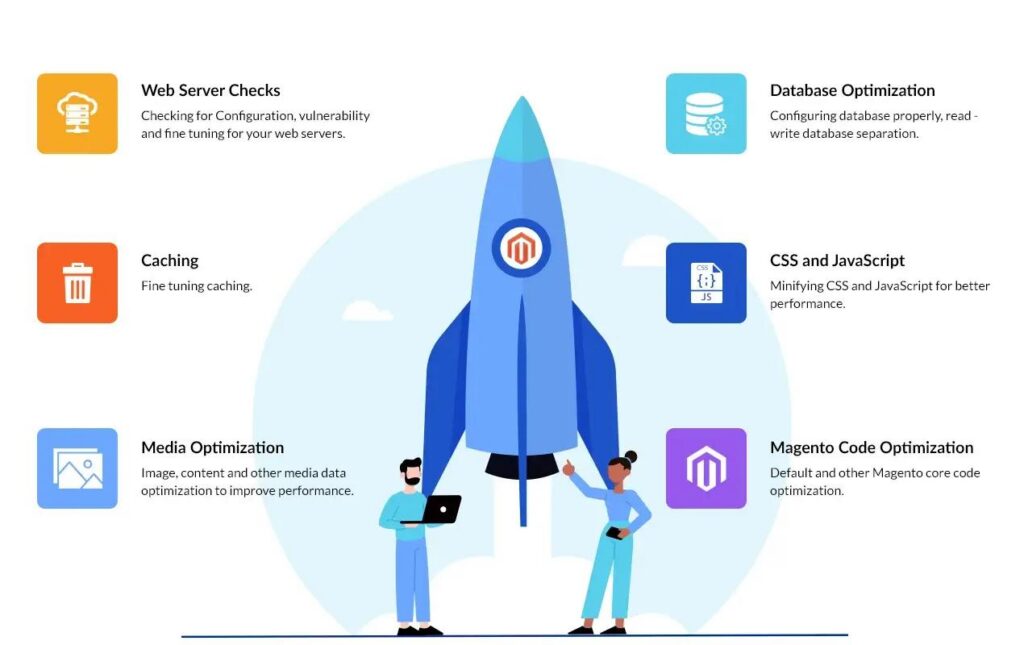
Magento hosting is a specialised web hosting environment designed to meet the unique technical demands of Magento and Adobe Commerce websites.
Unlike standard website hosting, Magento optimised hosting is configured specifically to handle Magento’s complex architecture. This includes server-level caching, advanced database optimisation, high-performance storage, security hardening and software versions that are fully compatible with Magento.
Think of it this way:
A standard shared hosting package is like using a family hatchback to transport heavy construction equipment. It may work for a while, but it’s not built for the job. Magento hosting, on the other hand, is purpose-built to support the platform’s demanding performance requirements.
A quality Magento hosting provider doesn’t simply rent server space. They provide an environment specifically tuned to ensure your ecommerce store performs efficiently, even during periods of heavy traffic.
Typical features included with a professional Magento hosting service include:
- NVMe or SSD storage for faster data access
- Redis object caching
- Varnish full-page caching
- CDN integration for global performance
- PHP versions certified for Magento
- Automatic backups
- Free SSL certificates
- Malware protection
- Server monitoring
- Staging environments
- One-click Magento deployment
- 24/7 technical support
These features work together to improve loading speeds, reduce server response times and provide a smoother shopping experience for your customers.
A simplified hosting journey looks like this:
Customer → CDN → Magento Web Server → Redis Cache → Database → Fast Product Page → Checkout
This optimisation is one of the key reasons why businesses looking for fast Magento hosting or the fastest Magento hosting often choose providers that specialise in Magento rather than generic hosting companies.
If you’re planning a new Magento project, working with an experienced Magento development agency ensures both your website and hosting environment are configured for maximum performance from day one.
Why Should You Choose Magento Hosting?
Many businesses assume any web hosting package will work with Magento. Technically, that’s true, but in practice, the results can vary dramatically.
Magento performs a significant number of database queries every time a visitor loads a page. Product filtering, layered navigation, customer accounts, stock management, pricing rules and checkout processes all require considerable server resources.
If your hosting environment isn’t capable of handling these requests efficiently, customers will experience slower page loads, delays during checkout and an overall frustrating shopping experience.
Specialist Magento hosting solutions are designed to overcome these challenges.
Better Website Speed
Website speed has become one of the most important ranking and conversion factors for ecommerce businesses.
A Magento-specific hosting environment uses technologies such as Redis, Varnish, LiteSpeed or NGINX to ensure pages load as quickly as possible.
Faster websites often lead to:
- Lower bounce rates
- More page views
- Better conversion rates
- Improved customer satisfaction
This is why many retailers actively search for the fastest Magento hosting rather than simply the cheapest option.
Improved Search Engine Rankings
Google considers website performance when evaluating user experience.
Fast-loading product pages, responsive category pages and reliable uptime all contribute towards stronger SEO performance.
Choosing Magento optimised hosting therefore supports both technical SEO and user engagement.
Stronger Security
Online stores process sensitive customer information, making security a top priority.
Professional Magento Commerce hosting providers usually include:
- Firewall protection
- Malware scanning
- DDoS mitigation
- Free SSL certificates
- Automatic backups
- Server patching
- Continuous monitoring
These features help reduce security risks while ensuring compliance with industry standards.
Better Scalability
Traffic isn’t always predictable.
Sales campaigns, product launches, Black Friday and Christmas promotions can cause sudden spikes in visitors.
Cloud-based Magento hosting cloud environments automatically allocate additional resources when demand increases, helping your website remain stable during busy trading periods.
Expert Magento Support
One of the biggest advantages of choosing a specialist provider is access to engineers who understand Magento.
Instead of generic hosting support, you’ll have access to professionals who can assist with:
- Magento upgrades
- Cache configuration
- PHP compatibility
- Elasticsearch
- Redis
- Performance tuning
For businesses without an internal technical team, this support is invaluable.
Lower Long-Term Costs
Although managed hosting may appear more expensive initially, it often proves cheaper over time.
With Magento 2 managed hosting, the hosting provider typically handles:
- Server maintenance
- Security updates
- Daily monitoring
- Performance optimisation
- Backups
- Infrastructure management
This reduces the need to employ dedicated infrastructure specialists and minimises downtime caused by technical issues.
Unless you have a dedicated DevOps team, managed hosting from a Magento-specific provider is generally the most cost-effective choice.
Magento Hosting Requirements for Magento 2
Magento is considerably more demanding than many other content management systems, so it’s essential to ensure your hosting environment meets its technical requirements.
Below are the recommended specifications for a modern Magento 2 installation.
| Requirement | Recommended |
| PHP | Latest supported version |
| Web Server | NGINX or Apache |
| Database | MySQL or MariaDB |
| Search Engine | OpenSearch or Elasticsearch |
| Memory | Minimum 2 GB (4 GB or more recommended) |
| Storage | NVMe SSD |
| SSL | Required |
| Redis | Recommended |
| Varnish | Recommended |
| Composer | Required |
| Cron Jobs | Required |
| CDN | Recommended |
Meeting these Magento hosting requirements helps ensure your website remains secure, performs efficiently and is compatible with future Magento updates.
However, technical specifications alone aren’t enough. The way the server is configured is equally important.
For example:
Fast Storage + Optimised PHP + Redis + Varnish + CDN = Faster Magento Store
This is why businesses looking for the best hosting for Magento 2 often choose specialist providers rather than general shared hosting services.
How to Choose the Best Hosting Provider for Magento?
With dozens of hosting companies claiming to offer the best Magento hosting, it can be difficult to know which one is genuinely right for your business. The ideal provider isn’t necessarily the cheapest or the most well-known it should offer a hosting environment that’s specifically designed for Magento’s performance and security requirements.
Before making a decision, consider the following factors.
1. Performance Should Be the Top Priority
Website speed directly affects user experience, conversion rates and search engine rankings. Even a one-second delay in page loading can increase bounce rates and reduce completed purchases.
Look for a hosting provider that includes:
- NVMe SSD storage for faster data retrieval
- Redis object caching
- Varnish full-page caching
- HTTP/3 support
- PHP 8.x optimisation
- CDN integration
- LiteSpeed or NGINX web servers
A combination of these technologies helps deliver fast Magento hosting and ensures your customers enjoy a smooth shopping experience.
Infrastructure → Optimised Server → Fast Website → Better User Experience → Higher Sales
2. Magento Expertise
General web hosting providers can host Magento, but they may not understand the platform’s unique requirements.
A specialist Magento hosting provider will be familiar with:
- Magento upgrades
- Elasticsearch and OpenSearch configuration
- Redis optimisation
- Cron jobs
- PHP compatibility
- Cache management
- Security best practices
This expertise can save hours of troubleshooting and reduce downtime.
3. Security Features
Every ecommerce website stores sensitive customer information, making security one of the most important factors when choosing a hosting provider.
Your hosting package should include:
- Free SSL certificates
- Web Application Firewall (WAF)
- DDoS protection
- Malware scanning
- Automatic security updates
- Daily backups
- Two-factor authentication for hosting accounts
Security shouldn’t be treated as an optional extra, it’s essential for protecting both your business and your customers.
4. Scalability
As your business grows, your hosting needs will change.
A good Magento Cloud Hosting Service should allow you to increase resources without migrating your website to a new server.
This is particularly important during:
- Black Friday sales
- Christmas promotions
- Flash sales
- New product launches
- Marketing campaigns
Cloud-based infrastructure makes it easier to handle sudden traffic spikes without affecting website performance.
5. Reliable Technical Support
Magento issues often require specialist knowledge. When problems arise, you don’t want to spend hours waiting for support from a team that isn’t familiar with Magento.
Choose a provider that offers:
- 24/7 support
- Live chat
- Ticket system
- Magento-certified engineers (where available)
- Fast response times
Good support can often be the difference between a minor issue and several hours of lost sales.
6. Managed Services
Many businesses underestimate the amount of server maintenance required to keep Magento running efficiently.
A Magento 2 managed hosting solution usually includes:
- Server monitoring
- Security patching
- Performance optimisation
- Backup management
- Infrastructure updates
- Proactive maintenance
This allows your team to focus on growing the business instead of managing servers.
If you’re also planning to customise your Magento store, working with a Magento Development Agency can ensure your hosting environment and website are optimised together.
Types of Magento Hosting
Not every Magento store requires the same hosting solution. The right choice depends on your website traffic, catalogue size, technical expertise and budget.
| Hosting Type | Best For | Advantages | Limitations |
| Shared Hosting | Small test stores | Low cost | Limited performance |
| VPS Hosting | Growing businesses | Dedicated resources | Requires more management |
| Dedicated Hosting | Large ecommerce stores | Maximum performance | Higher cost |
| Cloud Hosting | Scaling businesses | Flexible resources | Monthly costs vary |
| Managed Magento Hosting | Most businesses | Maintenance included | Slightly higher pricing |
Shared Hosting
Shared hosting places multiple websites on the same server.
Although it’s inexpensive, it’s generally not recommended for Magento because server resources are shared between many users.
This can result in:
- Slow loading times
- Limited RAM
- Reduced scalability
- Performance issues during busy periods
Shared hosting is only suitable for development environments or very small stores with minimal traffic.
VPS Hosting
A Virtual Private Server (VPS) provides dedicated resources within a shared physical server.
Advantages include:
- Better performance than shared hosting
- Greater control
- More RAM
- Improved scalability
Many medium-sized businesses choose VPS hosting as it offers a good balance between performance and affordability.
Dedicated Magento Hosting
With Magento dedicated hosting, your website has an entire physical server to itself.
This provides:
- Maximum processing power
- Dedicated RAM
- Greater security
- Full server control
- Excellent reliability
Dedicated hosting is often recommended for:
- High-traffic ecommerce stores
- Enterprise retailers
- Large product catalogues
- B2B businesses
Businesses searching for Magento dedicated server hosting usually require this level of performance.
Cloud Hosting for Magento
Cloud hosting has become one of the most popular options for ecommerce businesses.
Instead of relying on a single physical server, your Magento website operates across multiple cloud servers.
Benefits include:
- Automatic scaling
- Improved uptime
- Better disaster recovery
- Flexible resource allocation
- Faster global performance
Many businesses now consider the best Magento Cloud Hosting to be the most future-proof solution because it can grow alongside their business.
Managed Magento Hosting
Managed hosting combines powerful infrastructure with ongoing technical management.
Instead of maintaining the server yourself, your hosting provider takes care of:
- Software updates
- Server optimisation
- Security patches
- Performance monitoring
- Daily backups
- Technical support
For most ecommerce businesses, managed hosting provides the best balance between cost, performance and convenience.
As mentioned earlier:
Managed Magento hosting saves money for most stores. Unless you have a dedicated DevOps team, managed hosting from a Magento-specific provider is the smarter long-term investment.
What to Look for in a Magento Hosting Provider
Choosing a hosting provider based purely on price can lead to poor website performance and higher maintenance costs later.
Instead, compare providers based on the features they include.
Essential Features Checklist
✅ NVMe SSD storage
✅ Redis caching
✅ Varnish Cache
✅ OpenSearch or Elasticsearch support
✅ Free SSL certificates
✅ Daily automated backups
✅ Staging environment
✅ Content Delivery Network (CDN)
✅ Automatic scaling
✅ 99.9% uptime guarantee
✅ Malware scanning
✅ Server monitoring
✅ 24/7 technical support
✅ Magento-specific optimisation
Providers offering Magento hosting bundles with performance optimisation are often the best choice because they reduce the need for multiple third-party services.
If your website also requires ongoing maintenance, updates and security monitoring, consider combining hosting with Magento Website Maintenance Services.
Managed Magento Hosting vs Self-Managed Hosting
One of the biggest decisions businesses face is whether to manage the hosting environment themselves or choose a managed service.
Here’s how the two compare.
| Feature | Managed Magento Hosting | Self-Managed Hosting |
| Server Setup | ✔ Included | ❌ You manage it |
| Security Updates | ✔ Automatic | Manual |
| Performance Optimisation | ✔ Included | Manual |
| Daily Backups | ✔ Included | Usually manual |
| Monitoring | 24/7 | Self-managed |
| Technical Support | Magento specialists | General hosting support |
| Software Updates | Included | Your responsibility |
| Best For | SMEs & growing ecommerce businesses | Experienced DevOps teams |
| Cost | Higher monthly fee | Lower monthly fee |
| Overall Value | Excellent | Depends on technical expertise |
Although self-managed hosting appears cheaper, businesses often spend significantly more time maintaining infrastructure, applying security patches and resolving performance issues.
For this reason, most retailers choose managed Magento Cloud hosting unless they already have an experienced infrastructure team.
10 Best Magento Hosting Providers
Finding the right hosting provider depends on your store size, expected traffic, technical expertise and budget. Some providers specialise in managed Magento hosting, while others offer flexible cloud infrastructure that can be customised for Magento.
Below are ten of the best Magento hosting providers for 2026, along with their strengths, limitations and the types of businesses they suit.
1. Cloudways
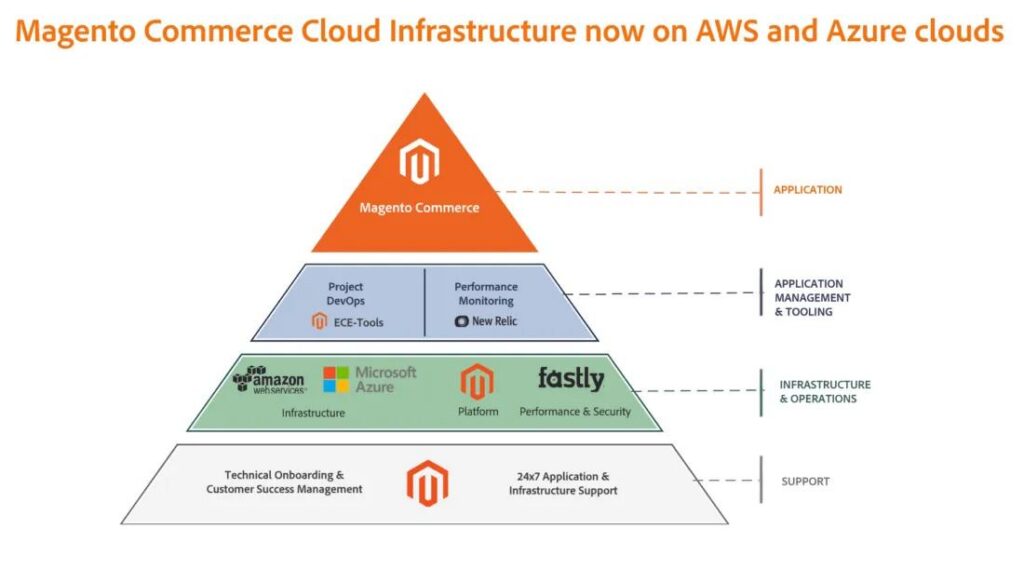
Cloudways has become one of the most popular choices for Magento businesses because it combines managed cloud hosting with the flexibility to choose your preferred cloud infrastructure provider, including DigitalOcean, AWS and Google Cloud.
Instead of managing servers yourself, Cloudways takes care of server maintenance, updates, security patches and performance optimisation. This makes it an excellent option for businesses looking for managed Magento Cloud hosting without the complexity of running their own infrastructure.
Best for
Growing ecommerce businesses and agencies that need scalable cloud hosting.
Key Features
- Choice of leading cloud providers
- Built-in CDN
- Redis and Varnish support
- Automatic backups
- Free SSL certificates
- One-click Magento installation
- 24/7 technical support
Pros
- Excellent performance
- Flexible pricing
- Easy server management
- Highly scalable
Cons
- Email hosting is not included by default
- Beginners may need time to understand cloud server options
2. GoDaddy
GoDaddy is one of the world’s best-known hosting providers and offers VPS and dedicated hosting plans suitable for Magento websites.
Although it isn’t a Magento-focused host, it provides reliable infrastructure for small and medium-sized businesses.
Best for
Businesses already using GoDaddy products and services.
Key Features
- VPS and dedicated hosting
- Free SSL
- Website backups
- Global data centres
- Easy control panel
Pros
- Well-known brand
- Reliable uptime
- Straightforward management
Cons
- Fewer Magento-specific optimisation features compared with specialist providers
3. Nexcess
Nexcess is widely regarded as one of the leading Magento hosting solutions available today.
Unlike many general hosting companies, Nexcess has built its infrastructure specifically for Magento and Adobe Commerce websites. It includes automatic scaling, advanced caching and expert Magento support.
Best for
Businesses looking for premium Magento Commerce hosting.
Key Features
- Managed Magento hosting
- Auto scaling
- CDN integration
- Staging environments
- Automatic updates
- Daily backups
Pros
- Magento specialists
- Excellent customer support
- Outstanding performance
- Strong security
Cons
- More expensive than entry-level providers
4. SiteGround
SiteGround is well known for combining affordability with excellent customer support.
Although it primarily serves WordPress websites, its cloud hosting plans also work well for Magento stores.
Best for
Small to medium-sized ecommerce businesses.
Key Features
- SSD storage
- Free CDN
- Daily backups
- Advanced security tools
- Cloud hosting options
Pros
- User-friendly interface
- Reliable support
- Good performance
Cons
- Entry-level plans may not provide enough resources for larger Magento stores
5. A2 Hosting
A2 Hosting focuses heavily on website speed and developer-friendly hosting environments.
Its Turbo Servers and VPS hosting plans are suitable for businesses looking for fast Magento hosting.
Best for
Developers and growing online retailers.
Key Features
- Turbo Servers
- NVMe SSD storage
- Free SSL
- Unlimited email accounts
- Developer tools
Pros
- Excellent speed
- Flexible server configurations
- Good value
Cons
- Best performance is only available on higher-tier plans
6. Bluehost
Bluehost offers affordable hosting that can support Magento websites, although it is better suited to smaller stores than enterprise-level ecommerce businesses.
Best for
Start-ups and businesses with modest traffic levels.
Key Features
- Free SSL
- Easy management dashboard
- One-click installations
- VPS hosting available
Pros
- Affordable pricing
- Beginner-friendly
- Good customer support
Cons
- Not specifically optimised for Magento
7. InMotion Hosting
InMotion Hosting has built a strong reputation for business hosting, offering VPS and dedicated server solutions that work well with Magento.
Best for
Businesses requiring dependable VPS hosting.
Key Features
- SSD storage
- Free backups
- Dedicated hosting
- Business-class support
Pros
- Reliable uptime
- Strong technical support
- Scalable infrastructure
Cons
- Dashboard isn’t as modern as some competitors
8. HostGator
HostGator provides budget-friendly VPS and dedicated hosting plans that can be configured for Magento.
Best for
Growing businesses on a tighter budget.
Key Features
- VPS hosting
- Dedicated servers
- Free SSL
- Scalable resources
Pros
- Competitive pricing
- Easy upgrades
Cons
- Limited Magento-specific features
9. Kinsta
Although Kinsta is best known for WordPress hosting, its Google Cloud Platform infrastructure delivers exceptional performance and reliability for ecommerce websites.
Businesses looking for premium cloud performance often consider Kinsta among the best cloud hosting for Magento options.
Best for
Businesses prioritising performance and uptime.
Key Features
- Google Cloud Platform
- Premium CDN
- Daily backups
- High-security architecture
Pros
- Outstanding speed
- Excellent support
- Enterprise-grade infrastructure
Cons
- Premium pricing
10. Pagely
Pagely focuses on enterprise cloud hosting and is trusted by large ecommerce brands requiring advanced infrastructure.
Best for
Large enterprises and high-volume Magento stores.
Key Features
- AWS infrastructure
- Enterprise security
- Dedicated support
- High availability
Pros
- Exceptional scalability
- Premium support
- Robust infrastructure
Cons
- Custom pricing may not suit smaller businesses
Magento Hosting Pricing Comparison
The cost of Magento hosting varies depending on the level of performance, management and infrastructure included.
| Hosting Provider | Starting Price* | Managed Hosting | Cloud Hosting | Suitable For |
| Cloudways | From £10/month | ✔ | ✔ | Growing businesses |
| GoDaddy | From £12/month | Partial | ✔ | SMEs |
| Nexcess | From £18/month | ✔ | ✔ | Magento specialists |
| SiteGround | From £3/month | Partial | ✔ | Small businesses |
| A2 Hosting | From £5/month | Partial | VPS | Developers |
| Bluehost | From £3/month | Partial | Limited | Start-ups |
| InMotion Hosting | From £8/month | Partial | VPS | Medium businesses |
| HostGator | From £4/month | Partial | VPS | Budget-conscious retailers |
| Kinsta | From £25/month | ✔ | ✔ | Premium ecommerce |
| Pagely | Custom pricing | ✔ | ✔ | Enterprise businesses |
*Prices are indicative and may vary depending on server specifications and contract length.
When comparing Magento hosting prices, avoid focusing solely on the monthly fee. A slightly higher investment often includes managed support, enhanced security, automated backups and performance optimisation, which can save significant time and money over the long term.
Common Magento Hosting Mistakes to Avoid
Selecting the wrong hosting solution can affect every aspect of your ecommerce store, from website speed to customer trust.
Here are some of the most common mistakes businesses make when choosing Magento hosting.
Choosing the Cheapest Hosting Available
Low-cost shared hosting may seem attractive, but it often lacks the resources required for Magento. Slow loading times and poor reliability can cost far more in lost sales than the savings made on hosting.
Ignoring Magento’s Technical Requirements
Before purchasing hosting, always confirm that it supports the latest PHP version, OpenSearch or Elasticsearch, Redis, Composer and other essential Magento technologies.
Underestimating Future Growth
Choose a hosting provider that can scale as your business grows. Migrating to a new server later can be time-consuming and disruptive.
Overlooking Security
Cybersecurity should never be an afterthought. Ensure your hosting provider includes SSL certificates, malware protection, backups and firewall security as standard.
Not Using a Staging Environment
Making updates directly on a live Magento store increases the risk of downtime and errors.
A staging environment allows you to test:
- Theme updates
- Magento upgrades
- Extension installations
- Custom development
- API integrations
before deploying them to your live website.
Choosing a General Hosting Provider Without Magento Expertise
Magento requires specialist knowledge. Working with a provider that understands the platform can reduce downtime and improve long-term performance.
If your business also integrates ERP systems, CRMs, payment gateways or third-party applications, professional Magento API Integration Services can help ensure your hosting environment supports reliable and secure integrations.
Similarly, if you need ongoing development or technical support, you can Hire Magento Developers or Hire Magento 2 Developers to optimise your store and maintain peak performance.
Conclusion
Choosing the right hosting provider is one of the most important decisions you’ll make for your Magento store. While price is certainly a consideration, performance, security, scalability and expert support should carry even greater weight.
Whether you’re launching a new ecommerce business or upgrading an existing Magento website, investing in Magento optimised hosting can improve page speed, strengthen security, enhance SEO performance and create a better shopping experience for your customers.
For most retailers, managed Magento hosting offers the best balance between cost and convenience. Unless you have a dedicated DevOps team managing your infrastructure, a specialist managed hosting provider can save time, reduce operational costs and minimise the risk of downtime.
Before making your final decision, compare hosting providers carefully, review the features included, and choose a solution that not only meets your current requirements but can also support your business as it grows.
A reliable hosting platform forms the foundation of every successful Magento store and selecting the right one today will help your ecommerce business thrive well into the future.

 Krish
Krish