

Introduction:
Search engine optimisation (SEO) is a cornerstone of any successful Magento 2 store. It drives consistent organic traffic, improves conversions, and supports long-term business growth. While Magento 2 comes equipped with robust built-in SEO tools, maximising their potential demands strategic planning, technical precision, and ongoing optimisation.
This comprehensive guide explores Magento 2 SEO features, tips, and best practises that will help you achieve higher search rankings, improve user experience, and increase conversions.
What Is Magento 2 SEO and Why Does It Matter?
Magento 2 SEO is more than just adjusting meta tags or tidying URLs. It is a multi-layered strategy that ensures your store is visible to search engines while providing a seamless user experience.
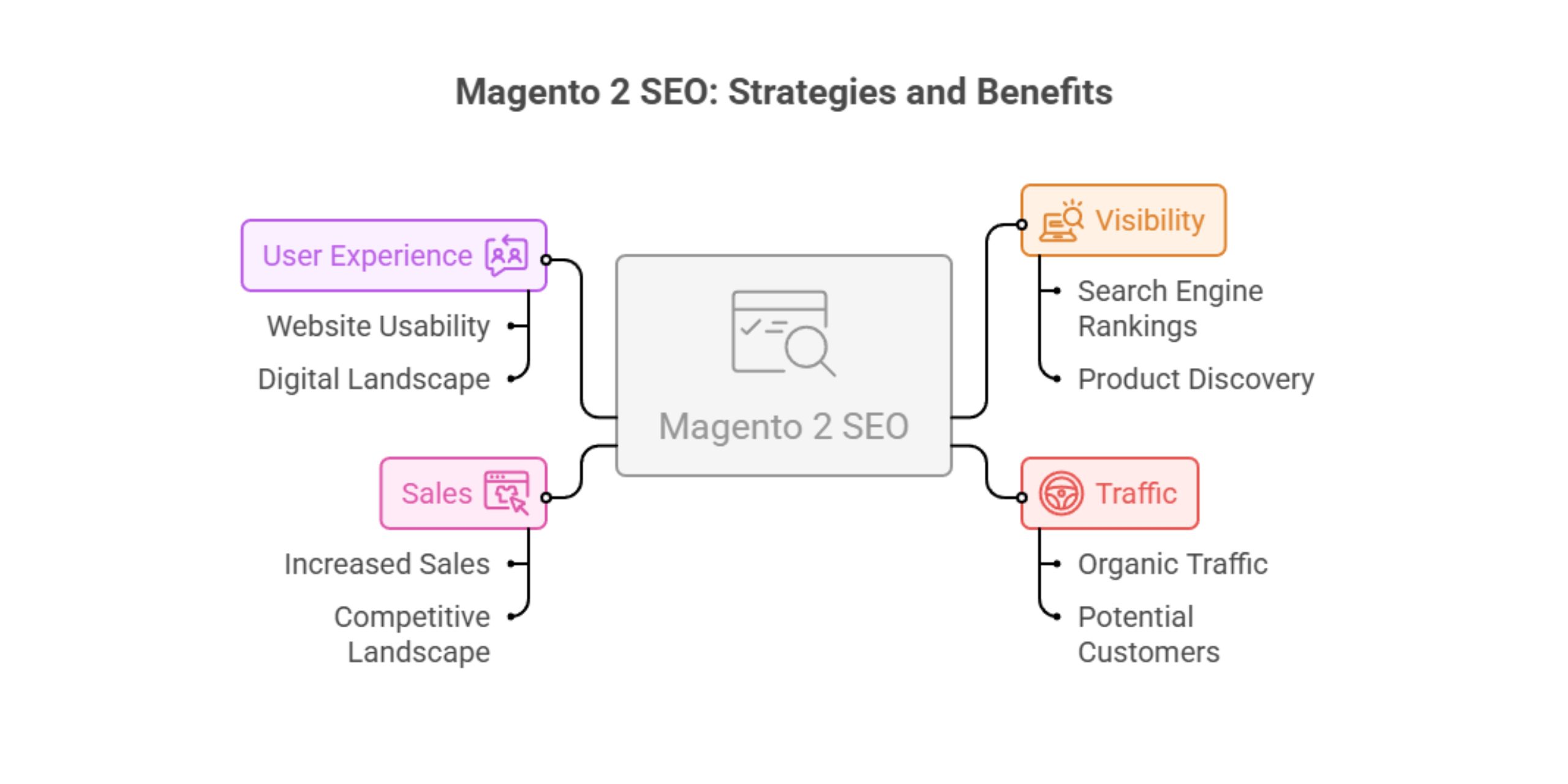
Why SEO matters for Magento 2 stores:
- Organic Traffic Growth: Optimised stores attract users searching for products rather than relying solely on paid ads.
- Higher Conversion Rates: Proper SEO makes pages more relevant, improving user engagement and sales.
- Reduced Duplicate Content Issues: Technical optimisations prevent multiple URLs from competing for the same ranking.
- Improved User Experience: Faster loading pages, responsive design, and structured navigation make shopping easier.
Monitoring SEO Performance
Check your rankings regularly, watch traffic trends, and keep an eye on conversion rates. Set up alerts so you know immediately if traffic tanks. Maintaining strong magento seo performance means staying on top of it.
- On-page optimisation: Meta tags, product descriptions, images, and internal linking.
- Technical SEO: URL management, canonical tags, site speed, and mobile optimisation.
- Analytics & Tracking: Understanding user behaviour, conversions, and engagement metrics.
Partnering with an experienced Magento ecommerce agency ensures proper implementation and avoids common pitfalls that could negatively impact rankings.
Key Magento 2 SEO Features
Magento 2 comes with a suite of built-in features that simplify SEO management:
- Meta Tags and Descriptions – Customise meta titles and descriptions for products, categories, and CMS pages. Auto-generation tools save time while maintaining consistency.
- SEO-Friendly URLs and Canonical Tags – Enable clean, descriptive URLs and canonical tags to prevent duplicate content issues.
- XML Sitemap and Robots.txt Management – Automatically generated sitemaps and editable robots.txt files ensure proper indexing of valuable pages.
- Image Optimisation – Add descriptive alt text and compress images to improve page speed and accessibility.
- Rich Snippets and Schema Markup – Implement structured data for products, ratings, and breadcrumbs, enhancing SERP visibility.
Product Page Optimisation
Product pages do the heavy lifting in your store. They’re where interest turns into sales.
Optimise Product Titles
Don’t overthink this, just tell people what you’re selling. Brand name, what it is, maybe a key feature or colour. Keep it under 60 characters so Google doesn’t chop it off. When you’re dealing with thousands of products, doing this manually is a nightmare. That’s when bringing in a magento Development Agency makes sense, they can set up rules that handle it automatically for magento seo optimisation.
Write Unique Product Descriptions
Copy-pasting manufacturer descriptions is tempting, but it absolutely tanks your Magento 2 SEO. Google sees the same description on fifty other sites and just ignores you. Write something original. Talk about how customers actually use the product, answer the questions you get asked all the time, and yes, work in some keywords, but naturally.
Use SEO-Friendly URLs
Would you click on “product.html?id=12345”? Neither would anyone else. Magento 2 lets you create custom URL keys, so use them. Something like “mens-black-running-trainers” tells both people and Google exactly what they’re getting, improving magento seo performance.
Add Meta Titles and Meta Descriptions
These are your shop window in Google results. You’ve got 50-60 characters for the title and 150-160 for the description to convince someone to click. Make them count, be specific, mention a benefit. Doing this across hundreds of products? A magento b2b agency can help you scale it without losing quality.
Optimise Images (Alt Text & Compression)
Big images slow everything down, and missing alt text is a wasted opportunity. Compress before you upload. For alt text, describe what’s actually in the image: “Men’s black running trainers” beats “IMG_001” every single time for seo for Magento 2.
Implement Structured Data (Rich Snippets)
You know those star ratings and prices you see in Google results? That’s structured data doing its job. It makes your listings stand out and gets more clicks. Google’s Rich Results Test will tell you if yours is set up properly. Not comfortable mucking about with code? Grab a Magento 2 seo extension that handles it for you.
Internal Linking for Products
Don’t let products sit there on their own. Link to related items, show what other customers looked at, and suggest accessories. It keeps people clicking around your store and helps Google figure out how everything connects. It’s one of those advanced SEO strategies that builds value over time.
Category Page Optimisation
Optimise Category Titles and Descriptions
Category pages can bring in serious traffic if you get them right. Clear titles with the keywords people actually search for, plus a proper description of 200 to 300 words explaining what’s in the category and who it’s for. Managing loads of categories across a big store? That’s where ecommerce magento development specialists can help maintain consistency.
Use Keyword-Rich URLs
Same story as product URLs. “clothing/mens-trainers” works a lot better than “category/12” for Magento 2 seo tips. It’s just common sense.
Add Breadcrumbs for Navigation
Breadcrumbs show people where they are Home > Clothing > Men’s Trainers, and Google loves them too. Magento 2’s got this built in, just switch it on.
Include Internal Links to Products
Highlight your bestsellers, new stuff, whatever’s seasonal. These links pass authority and keep people browsing instead of bouncing.
Optimise Category Images
Same rules apply, compress them, add alt text. Speed trumps pretty pictures when it comes to seo for a Magento website.
Implement Canonical Tags to Avoid Duplicate Content
Magento creates different URLs when people filter by price or colour. Without canonical tags, Google thinks these are separate pages competing with each other. Point them all back to the main category URL. It’s on every magento seo checklist for a reason.
Technical SEO for Magento
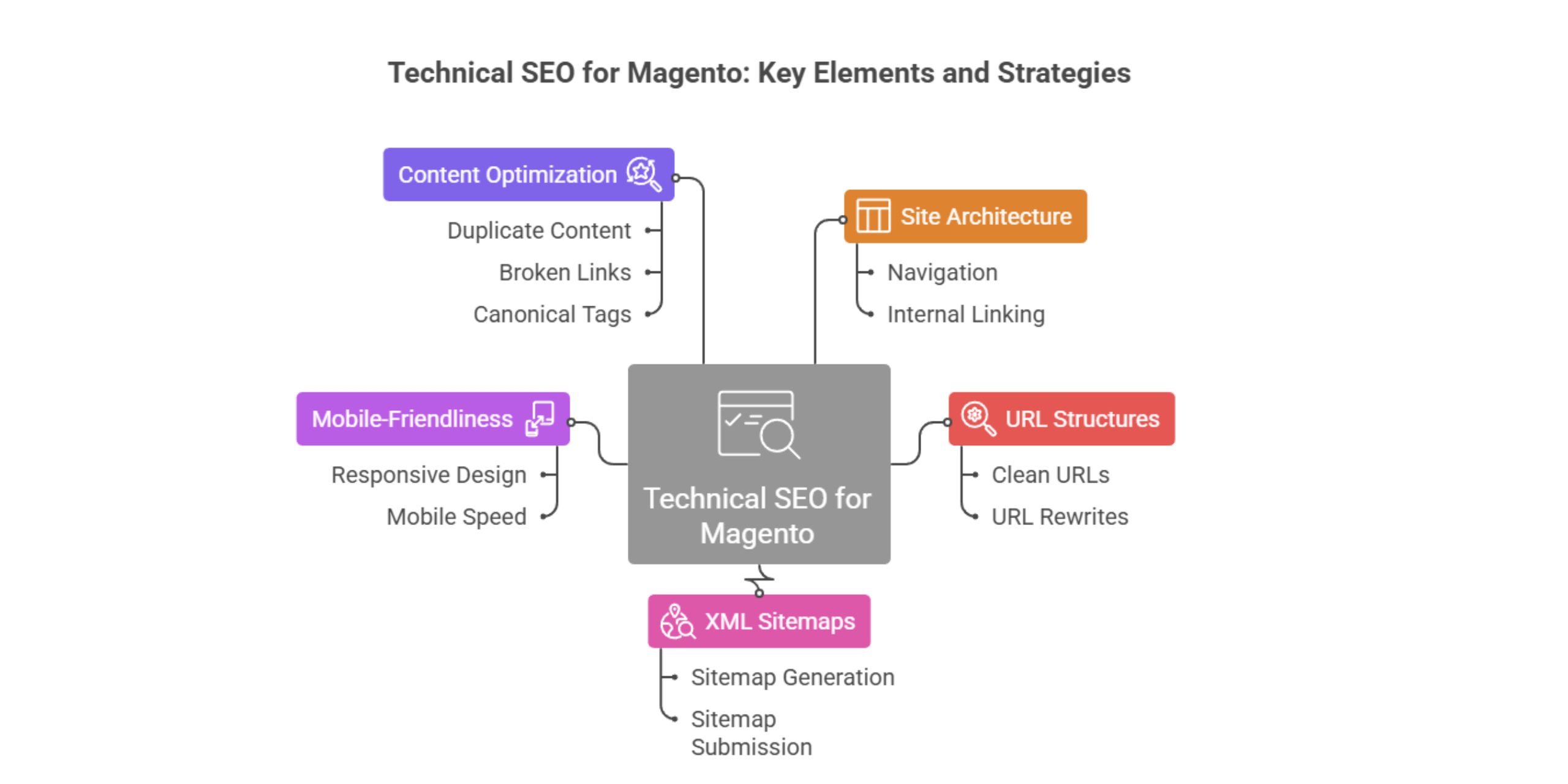 Improve Site Speed
Slow sites kill conversions and rankings both. Turn on full-page caching, use a CDN, and compress everything. Magento can be a bit heavy if you don’t set it up properly. If you hire a Magento Developer who knows what they’re doing, they’ll know exactly which levers to pull.
Mobile-Friendly Design
Most of your traffic’s coming from phones now. Test on actual devices, not just your laptop’s developer tools. Mobile performance directly affects magento seo performance.
XML Sitemap Creation and Submission
Magento generates these automatically, which is handy. Just make sure you’ve submitted them to Google Search Console.
Robots.txt Optimisation
This file tells search engines where they can and can’t go. Magento’s default version blocks some stuff it probably shouldn’t. Review it and customise it.
HTTPS/SSL Configuration
If you’re not running HTTPS by now, drop everything and sort it out. It’s a ranking factor, and customers expect it.
Enable AMP (Optional)
Accelerated Mobile Pages used to be a bigger deal. If your mobile speed’s already decent, you probably don’t need to bother.
Structured Data for Better SERP Appearance
Schema markup makes a massive difference to how you show up in search results. Those rich snippets get clicked way more often. Definitely one of the better Magento 2 seo tips.
Content Marketing & SEO
Blogging for Magento
A blog lets you go after keywords your product pages can’t touch. It brings people in earlier in their journey, before they’ve decided exactly what to buy. Link from your posts to relevant products. It’s a long game, but it’s the most sustainable way to do seo on Magento.
User-Generated Content
Customer reviews, Q&As, photos, all of it’s gold for SEO. It’s unique content that updates constantly, and Google knows people trust it more than your marketing copy.
Reviews & Ratings Optimisation
Get your structured data sorted so those star ratings show up in search results. Reply to reviews, especially the dodgy ones.
Internal Linking Strategies
Build connections everywhere, blog posts to products, categories to guides. Use proper anchor text that actually describes what you’re linking to.
Magento SEO Extensions
Recommended SEO Extensions
Magento’s built-in SEO is decent, but extensions like Mageworx SEO Suite can automate loads of the tedious stuff. When you’re running a big store, trying to do it all manually is just daft.
Benefits of Using SEO Extensions
They handle the repetitive work, keep everything consistent, and flag magento seo issues you’d probably miss. For stores with thousands of SKUs, they’re essential.
How to Configure Extensions
Test everything on staging first. Extensions can conflict with each other or your theme. If you’re juggling multiple tools, get someone who knows API Integration & Management service to check they’re playing nicely together.
Tracking & Analytics
Google Analytics Setup
Get GA4 installed with proper ecommerce tracking. You need to know which channels bring in traffic, which products convert. Watch your organic traffic specifically. That data tells you where to focus your seo for Magento 2 efforts.
Google Search Console Integration
This is your direct line to Google. Submit your sitemap, watch what’s getting indexed, fix errors when they pop up. The Core Web Vitals report will tell you if your speed’s up to scratch.
Monitoring SEO Performance
Check your rankings regularly, watch traffic trends, and keep an eye on conversion rates. Set up alerts so you know immediately if traffic tanks. Maintaining strong magento seo performance means staying on top of it.
Conclusion
Look, magento seo isn’t something you tick off a list and move on from. It’s ongoing work making your store faster, easier to find, and better to use. From getting product pages right to sorting technical bits and using the proper magento seo & marketing tools, all of it adds up. The strategies we’ve covered give you a solid starting point for ranking higher, but actually doing the work is what counts. At Kiwi Commerce, we help businesses get the most out of their Magento stores through expert development and data-driven SEO. As a leading eCommerce SEO agency, we work closely with you to implement Magento SEO optimisation techniques that drive measurable results. Start putting these strategies into practice, and you’ll notice a significant improvement in your organic traffic.


 Kiwi Commerce